

As your loved ones age or recover from a major health event, you might find yourself standing at a crossroads.
You know they need help to remain safely in their own house, but the terminology used by agencies and insurance providers can feel like a maze.
Choosing the right path is essential for their safety and your peace of mind.
The primary confusion usually stems from two terms that sound nearly identical but serve completely different purposes: home health care and non-medical home care services.
Understanding the nuances between clinical support and daily living assistance is the first step toward making an informed decision.
This guide will break down everything you need to know to ensure your family receives quality home health care or the appropriate supportive services they deserve.
What is Home Health Care?

At its core, home health care is clinical, medical care provided by licensed healthcare professionals. It is often prescribed by a physician as part of a formal treatment plan.
Think of it as bringing the hospital or the rehab clinic into your living room.
Because it involves medical intervention, the providers are typically Registered Nurses (RNs), Licensed Practical Nurses (LPNs), or specialized therapists.
This type of care is intermittent, meaning the professionals visit for specific tasks or sessions rather than staying for an entire eight-hour shift.
Common tasks include:
- Wound care for surgical incisions or pressure sores
- Administering injections or intravenous (IV) medications
- Monitoring serious illness and unstable health status
- Physical, occupational, or speech therapy
What is Non-Medical Home Care?
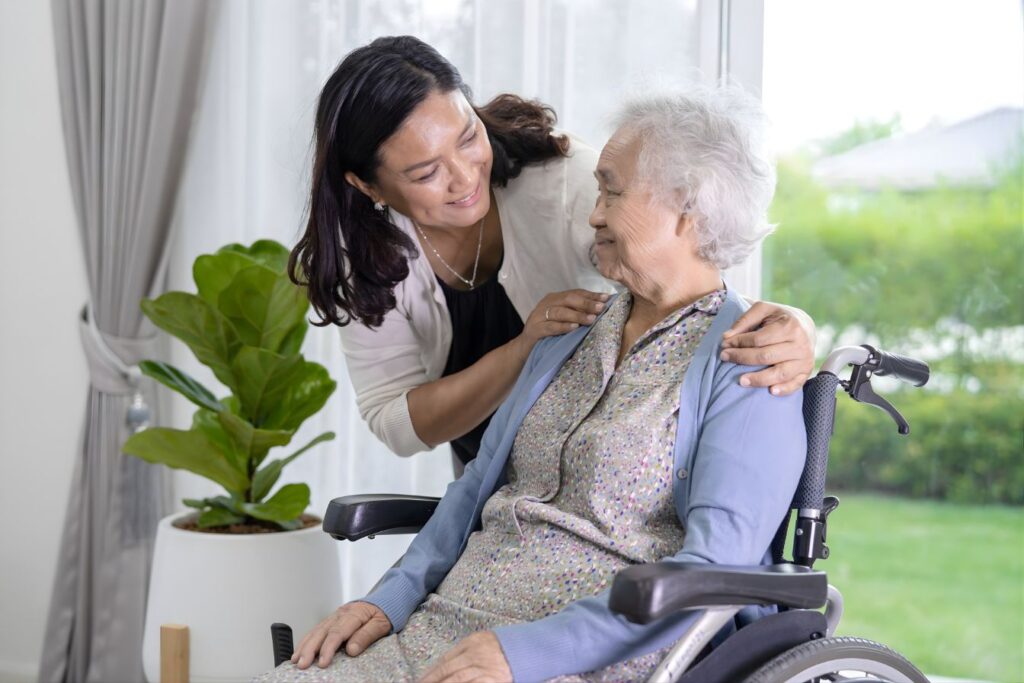
While home health is clinical, non medical home care is about lifestyle and functional support. It focuses on “Activities of Daily Living” (ADLs) and “Instrumental Activities of Daily Living” (IADLs).
A non medical home care agency provides personal care services that assist with the things a person needs to do to get through the day safely and comfortably.
These caregivers are not usually nurses; they are often Home Health Aides (HHAs) or Certified Nursing Assistants (CNAs) who focus on the “human” side of care rather than the “medical” side.
Non medical home care services are designed to help seniors or individuals with disabilities maintain independence. This includes:
- Personal Care: Assistance with bathing, dressing, and toileting
- Companion Care: Engaging in conversation, reading, or going for walks
- Household Support: Light housekeeping, meal preparation, and laundry
- Transportation: Driving the client to appointments or grocery shopping
Home Health Care Vs Non Medical Home Care
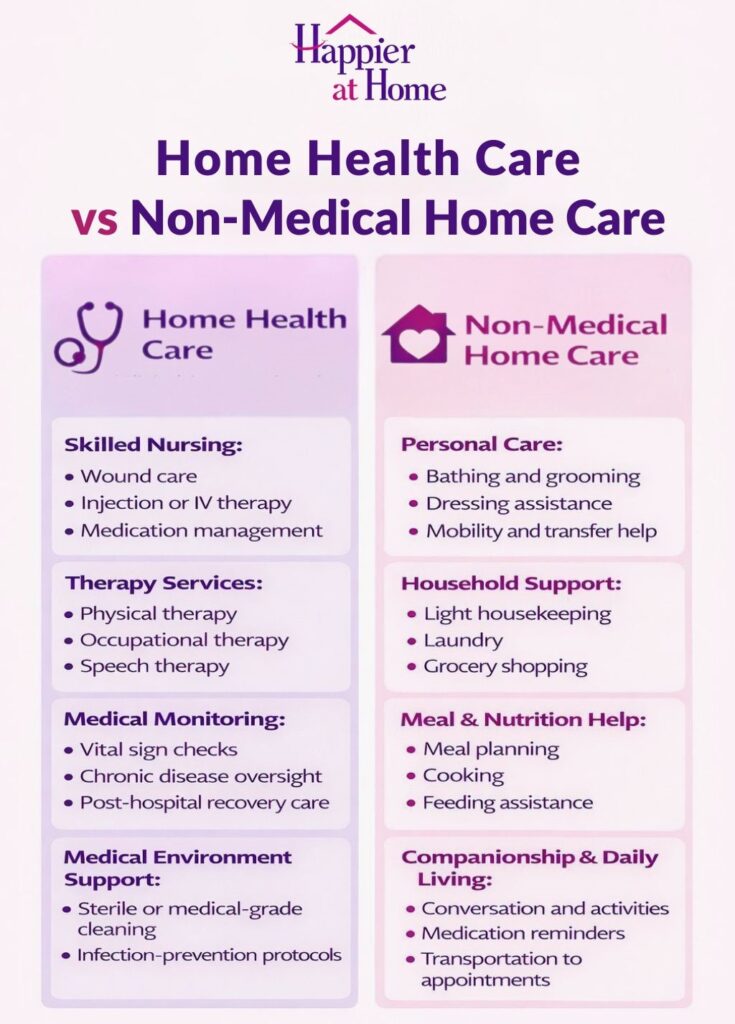
Deciding which service to hire depends on the specific goals of the individual. Here are the most common scenarios where these services shine and how they differ in practice.
Home Help After Surgery
If a patient has just been discharged from a hospital after a hip replacement or heart surgery, they likely need home help after surgery. In this case, both services often work in tandem.
A home health nurse visits to check the incision and manage medication, while a non-medical home care provider stays for several hours to help the patient get in and out of bed safely and prepare nutritious meals.
Chronic Disease Management
For someone living with a condition like COPD or congestive heart failure, quality home health care is vital for monitoring vital signs and ensuring the disease does not escalate to a hospital readmission.
This clinical oversight ensures that medications are adjusted and symptoms are caught early.
Aging in Place
For a senior who is physically healthy but struggling with memory or mobility, a non medical home care agency is the best fit.
This prevents isolation and ensures the home remains clean and the pantry remains stocked. Unlike medical care, this support focuses on long-term comfort and maintaining a high quality of life.
Specialized Environments
In some cases, families seek out medical cleaning services to ensure the home environment is sterile and safe for a patient with a suppressed immune system.
While a standard caregiver handles light household cleaning, medical cleaning services focus on disinfection and sanitization to prevent infection.
This is a critical distinction for patients recovering from major procedures who must avoid hospital-acquired germs.
Who Qualifies for Home Health Care Services?
One of the biggest hurdles families face is coverage. Since home health is medical, it is often covered by Medicare or private insurance, but there are strict rules.
So, who qualifies for home health care services? Generally, three criteria must be met:
- Doctor’s Orders: A physician must certify that the patient needs intermittent skilled nursing care or therapy.
- Homebound Status: The patient must be “homebound,” meaning leaving the home requires a major effort or the help of another person.
- Skilled Need: The care required must be something that only a licensed professional can provide. Helping someone take a bath does not count as a skilled medical need.
On the other hand, qualification for non-medical home care is much simpler. If you can afford the service out-of-pocket or have Long-Term Care Insurance, you qualify.
There is no requirement to be homebound or to have a doctor’s note.
Private Duty Home Care Vs Home Health Care
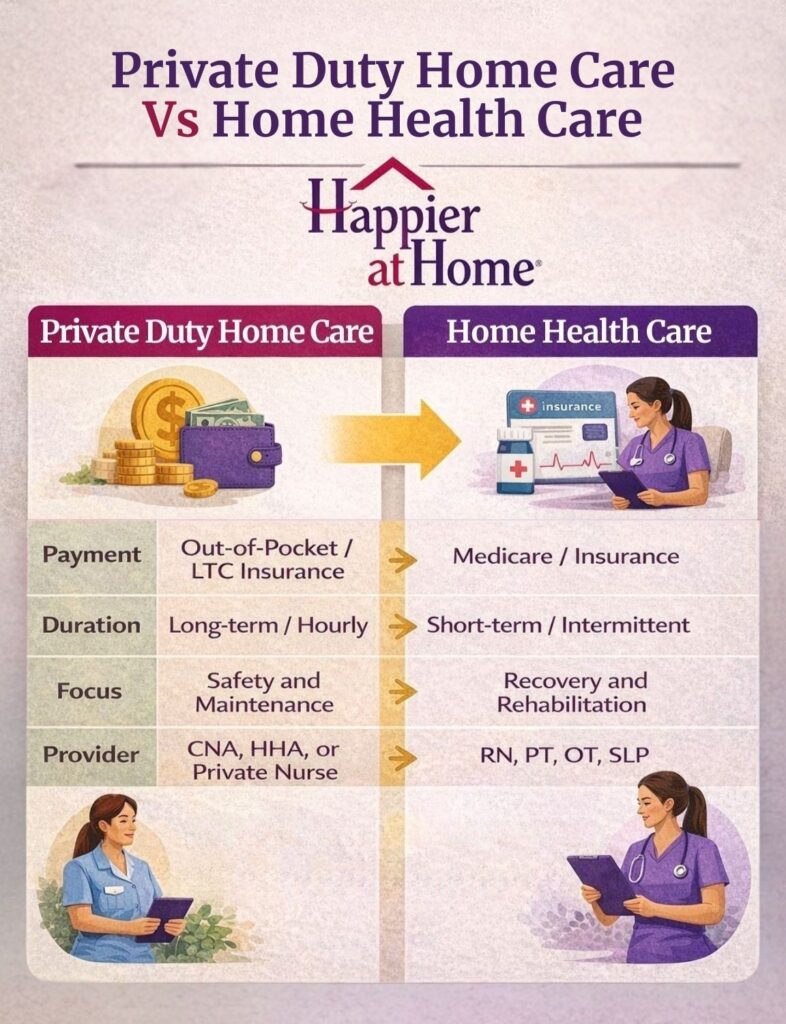
When researching, you will likely encounter the term private duty home care. This can be confusing because it often bridges the gap between the two main categories.
Private duty home care refers to a model where the family pays out-of-pocket (private pay) for long-term, one-on-one care.
Unlike standard home health which is intermittent, private duty can provide a nurse or a caregiver for 24 hours a day if needed. Here are some of the major differences:
The main difference is that private duty home care is driven by the family’s desires and needs rather than the strict limitations of an insurance company’s medical necessity guidelines.
The Role of a Geriatric Care Manager

Navigating these two worlds is exhausting. This is where geriatric care management becomes an invaluable asset. Think of them as a “professional relative.”
A geriatric care manager is usually a social worker or a nurse who specializes in caring for seniors at home.
They conduct assessments to determine if the senior needs non-medical home care for daily tasks or if they meet the criteria for who qualifies for home health care services.
They act as an objective third party to:
- Coordinate between different agencies.
- Ensure that quality home health care standards are being met.
- Review the home for safety hazards.
- Communicate updates to family members who live far away.
Hiring a care manager is especially helpful for busy families who want to ensure the best quality medical or non medical home care for their loved ones.
Daily Impact of Medical and Non-Medical Home Care
To truly see the difference, let’s look at a typical Tuesday for a client using both non medical home care services and home health.
At 9:00 AM, a caregiver from a non medical home care agency arrives.
They help the client out of bed, assist with a shower, and make a breakfast of oatmeal and tea. They then spend time organizing the mail and tidying the kitchen.
At 11:00 AM, a physical therapist from a quality home health care agency arrives. For 45 minutes, they work with the client on balance exercises and gait training to prevent falls.
The non-medical home care provider watches the session so they can encourage the client to practice those moves later in the day.
At 12:00 PM, the therapist leaves. The caregiver prepares lunch and then takes the client to a local pharmacy to pick up a new prescription.
In this scenario, the medical professional addressed the physical deficit (the “health” part), while the non-medical home care professional addressed the lifestyle and safety needs (the “living” part).
Non Medical Home Care Services Cost Considerations
Budget is often the deciding factor for many families. Because non-medical home care is billed by the hour, the senior care cost can add up quickly if 24/7 care is required.
Most non-medical home care services are paid for via:
- Personal savings
- Long-Term Care Insurance policies
- Veterans Aid and Attendance benefits
- Medicaid (in specific states under waiver programs)
Home health care is usually “free” to the patient if they meet the Medicare requirements, as Medicare Part A or Part B covers 100% of the cost for eligible home health visits.
However, it is temporary. Once the patient has reached their goals or is no longer homebound, the coverage ends.
The Importance of Medical Cleaning Services
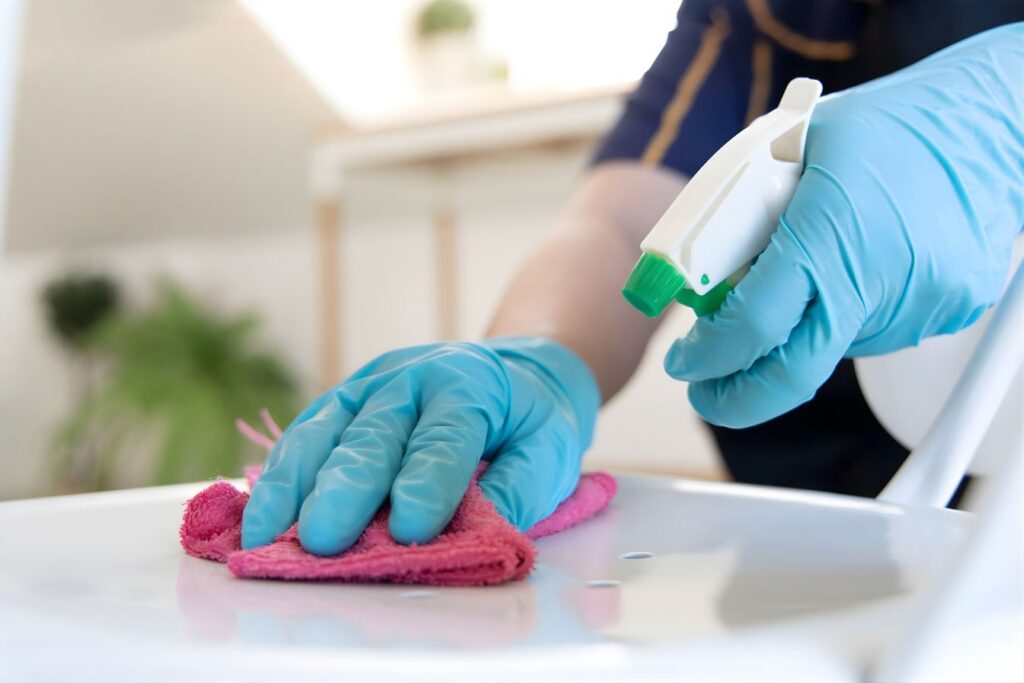
When bringing care into the home, the physical state of the house is as important as the person providing the care. This is why many families now look into specialized medical cleaning services.
If a patient is receiving home help after surgery, their immune system might be compromised. Regular house cleaning may not be enough to eliminate pathogens like MRSA or C. diff.
Medical cleaning services use hospital-grade disinfectants and sanitizing protocols to ensure the recovery environment is as safe as a clinical setting.
This specialty service is an excellent complement to both medical and non-medical home care.
How to Choose a Medical or Non Medical Home Care Agency
Whether you are looking for a non medical home care agency or a skilled nursing provider, you should ask the following questions:
- Is the agency licensed and insured?
This protects you from liability if a caregiver is injured in your home. - How do you vet your staff?
Ensure they perform background checks and check references. - What is the backup plan?
If a caregiver is sick, does the non medical home care company have a replacement ready? - Can I meet the caregiver first?
Personality fit is huge when someone is in your private space.
A More Holistic Approach to Aging at Home
The choice between home health care and non-medical home care is not always an “either/or” situation. Often, the highest quality of life is achieved when these two services overlap.
By understanding what is home health care and how it differs from the daily support of non-medical home care services, you can build a support system that covers every angle of your loved one’s well-being.
From the clinical expertise of a nurse to the gentle companionship of a caregiver, the goal remains the same: keeping your family safe, healthy, and happy at home.
FAQ’s
Can I receive home health care and non-medical home care simultaneously?
Yes. Many families use both to ensure total coverage. A home health nurse handles medical tasks like wound care, while a non medical home care aide assists with daily living activities like meal preparation and bathing.
Are expenses for non-medical home care tax deductible?
Potentially. If a physician certifies a senior is “chronically ill” and requires help with at least two activities of daily living, the medical portion of non-medical home care services may be deductible if they exceed 7.5% of your adjusted gross income.
What is the difference between a Home Health Aide (HHA) and a Personal Care Assistant (PCA)?
An HHA typically has more medical training and can monitor vitals or assist with medical equipment under a nurse’s supervision. A PCA focuses primarily on companionship, light housekeeping, and basic personal care.
Does Medicare Advantage cover non-medical home care in 2026?
Yes, some Medicare Advantage (Part C) plans now offer “supplemental benefits” that cover non-medical home care to prevent hospitalizations.
Traditional Medicare (Parts A and B) generally does not cover these services.
What is the main difference between home health care and hospice?
Home health care focuses on recovery, rehabilitation, or managing a chronic illness with curative intent.
Hospice care is comfort-focused (palliative) for individuals with a terminal diagnosis and a life expectancy of six months or less.