
A heart attack usually feels like pressure, squeezing, or fullness in the center or left side of the chest that lasts more than a few minutes or comes and goes. Discomfort can also spread to the jaw, neck, back, or arms, along with shortness of breath, a cold sweat, nausea, or unusual tiredness. Call 911 right away, and take heart in knowing that everyday habits can prevent most heart disease.
Movies make heart attacks look obvious, with a sudden clutch of the chest and a dramatic fall. Real life is usually quieter. Many people feel heavy pressure, an odd ache in the jaw, or a tiredness that won’t lift, so they wait and hope it passes.
The hopeful part is that the heart sends clear warning signals, and most heart trouble can be prevented. This guide covers what to watch for in yourself and the people you love, plus simple habits that keep hearts strong for decades.
What Does a Heart Attack Feel Like?
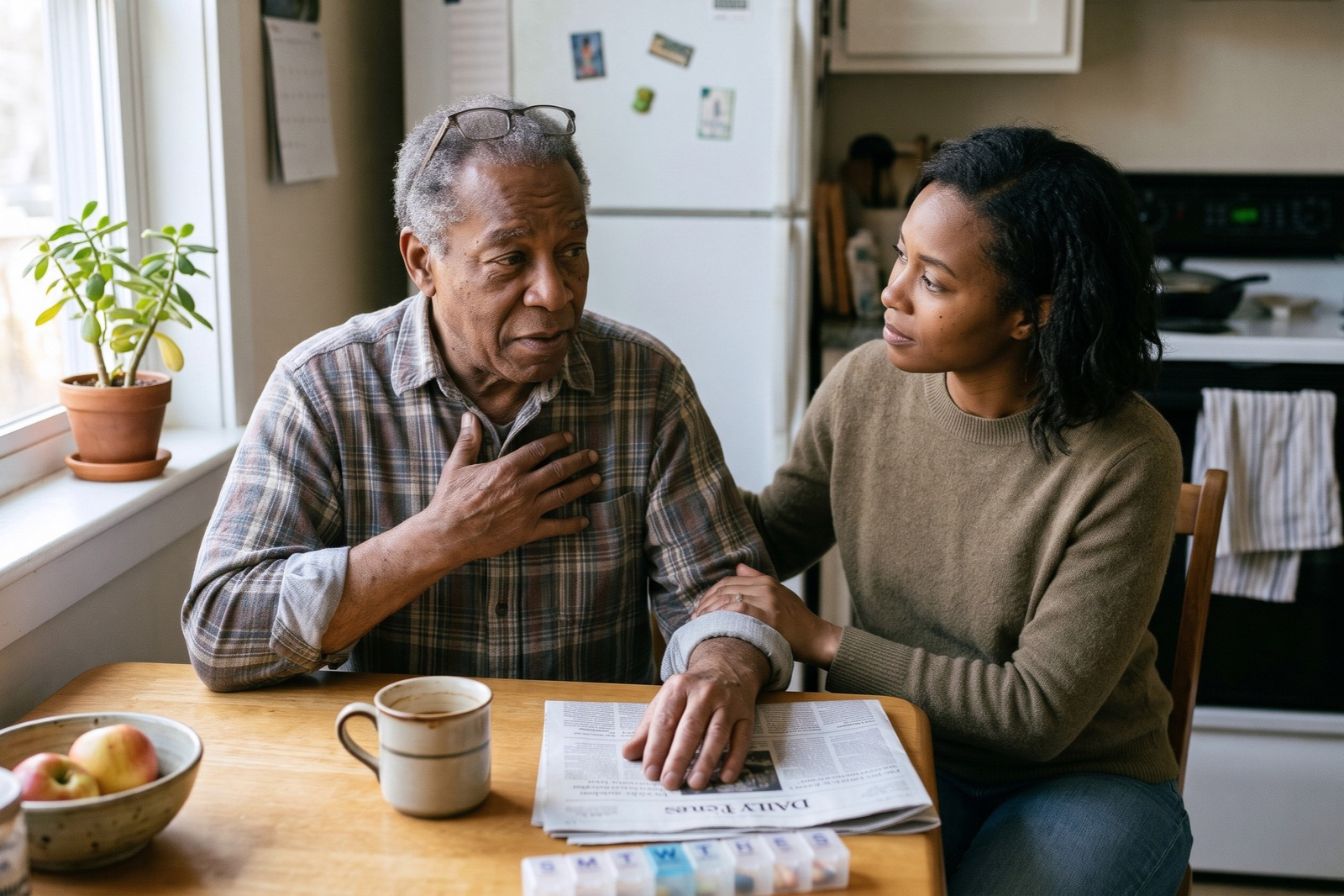
A heart attack happens when blood flow to part of the heart muscle gets blocked, usually by a clot in a narrowed artery. The National Heart, Lung, and Blood Institute notes that chest discomfort is the most common symptom, but it is far from the only one.
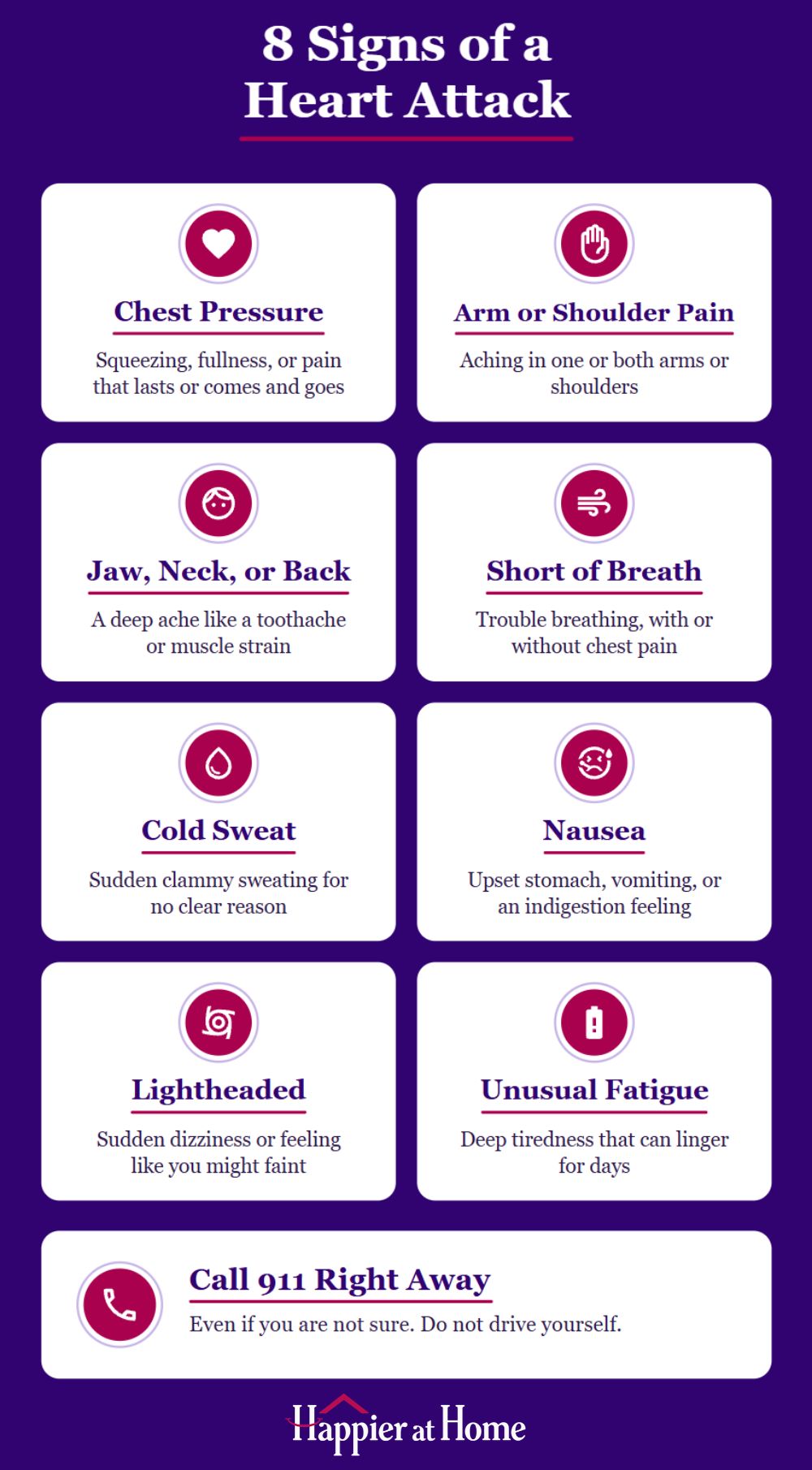
The most common symptoms of a heart attack include:
- Pressure, squeezing, fullness, or pain in the center or left side of the chest
- Discomfort that spreads to the arms, shoulders, neck, jaw, or back
- Shortness of breath, with or without chest discomfort
- A cold sweat that seems to come out of nowhere
- Nausea, vomiting, or a feeling like indigestion
- Lightheadedness or sudden dizziness
- Unusual tiredness that can linger for days
Survivors often describe the chest feeling as a heavy weight sitting on them or a belt tightening around the ribs. Others simply say something felt wrong in a way they had never felt before. That instinct is worth trusting.
Heart Attack Signs Don’t Always Arrive All at Once
Heart attack manifestations vary widely from person to person. Symptoms can start slowly and come and go over several hours, so many people mistake them for heartburn or a pulled muscle. The more signs of a heart attack you notice together, the more likely your heart is asking for help.
Pay attention to how the pain responds to rest. Angina often eases when you sit down, but heart attack pain does not go away with rest or medicine.
What Does a Heart Attack Feel Like for a Man?
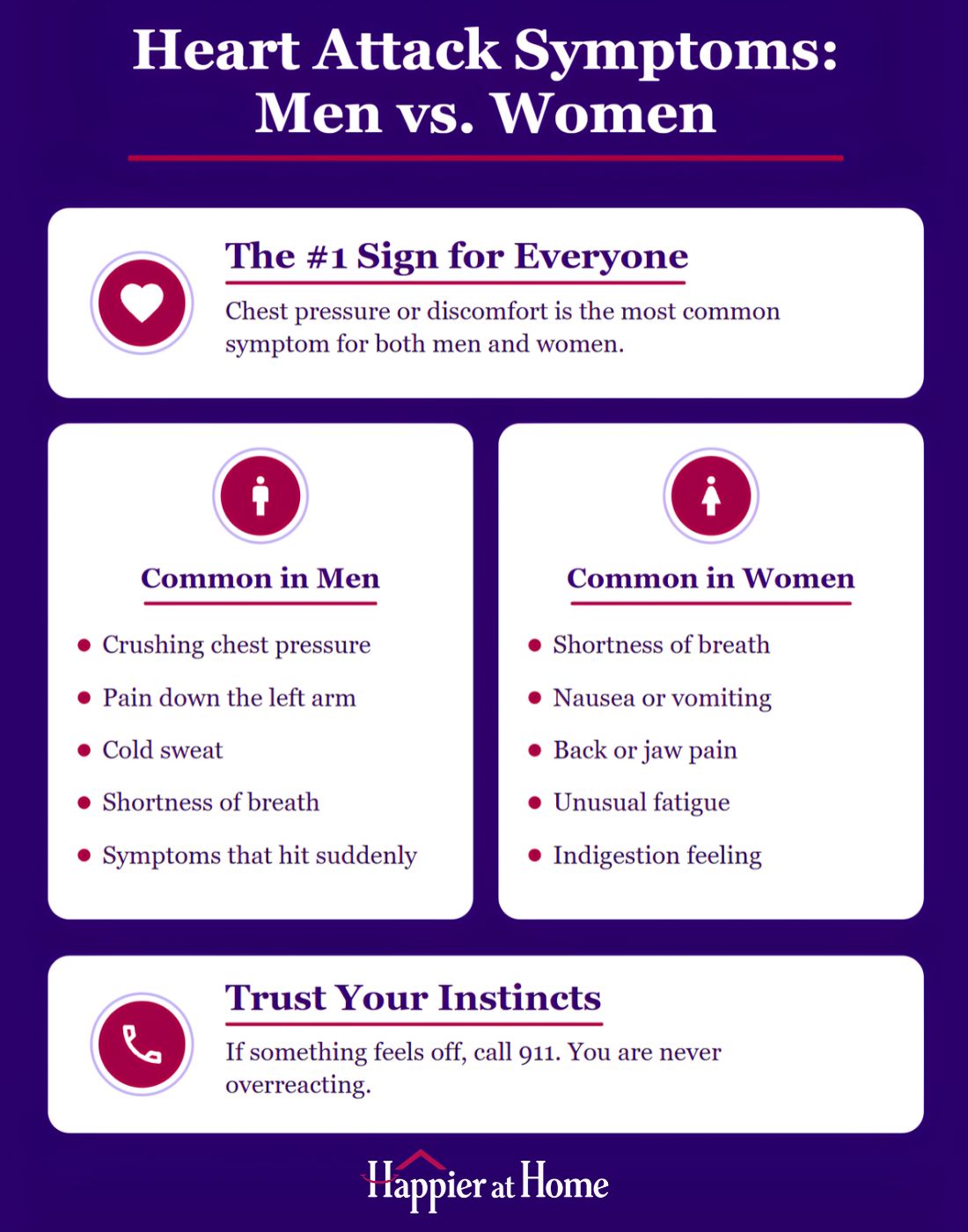
Men are more likely to report the classic heart attack signs, such as crushing chest pressure, pain down the left arm, a cold sweat, and trouble catching their breath. Men also tend to have their first heart attack at a younger age than women. Quieter symptoms like jaw discomfort, fatigue, or an upset stomach can still happen.
Many men are tempted to tough it out and wait. Waiting is never the brave choice, because treatments to open a blocked artery work best within the first hour.
What Does a Heart Attack Feel Like for Women?
Chest pain is still the most common symptom for women. However, women are more likely than men to notice shortness of breath, nausea or vomiting, and pain in the back or jaw. Unusual fatigue is also more common and may show up days before the heart attack itself.
These signs can feel like the flu or a stressful week, so women sometimes delay care. If something feels off, speak up and ask to be checked for a heart problem. You are never overreacting when your heart is involved.
What Does a Silent Heart Attack Feel Like?
About 1 in 5 heart attacks is silent, which means the person never realizes it happened. It may feel like mild indigestion, a strained muscle in the chest or upper back, or a touch of the flu. Some people feel nothing at all, and the damage only shows up later on an EKG.
Silent heart attacks are more common in older adults and in people with diabetes, which can dull pain signals. That makes a yearly checkup one of the best gifts you can give yourself as you age.
What Does Jaw Pain From a Heart Attack Feel Like?
Jaw pain from a heart attack often feels like a deep ache or pressure in the lower jaw, sometimes on both sides. People compare it to a toothache they can’t pin to any one tooth. It may spread into the neck or throat and does not change when you chew.
The heart and jaw share nerve pathways, so the brain can misread where the pain is coming from. Jaw pain alone is usually dental or muscle related. It deserves a 911 call when it appears suddenly with shortness of breath, sweating, nausea, or chest discomfort.
What to Do If You Notice Signs of a Heart Attack
Quick action is the most powerful tool anyone has. If you or someone near you shows heart attack signs:
- Call 911 right away, even if you are not sure
- Do not drive yourself, since paramedics can begin treatment on the way
- Unlock the front door and sit somewhere comfortable
- Follow the dispatcher’s guidance, including any advice about aspirin
For seniors who live alone, having someone nearby makes a big difference. 24 hour home care means a trained caregiver is there to notice changes and call for help fast.
How to Prevent a Heart Attack at Any Age
Here is the most uplifting fact in this article. Experts at the CDC estimate that about 80 percent of premature heart disease and strokes can be prevented. Age and family history matter, but daily choices carry real power.
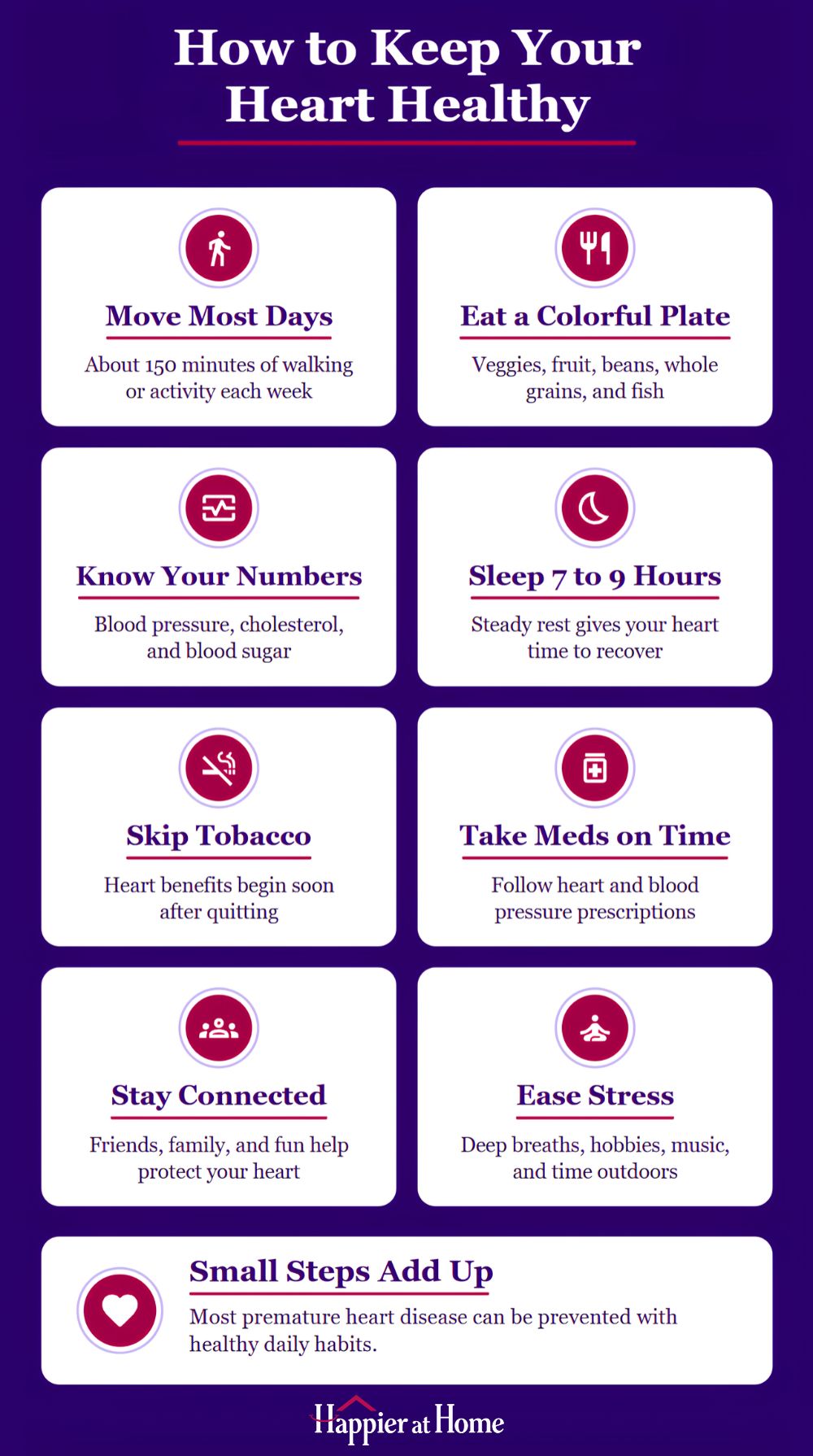
So how do you prevent a heart attack? It starts with small, steady habits:
- Move most days: Aim for about 150 minutes of moderate activity each week, like brisk walking or swimming.
- Fill your plate with color: Vegetables, fruits, beans, whole grains, and fish support healthy arteries.
- Know your numbers: Track your blood pressure, cholesterol, and blood sugar with your doctor.
- Sleep 7 to 9 hours: Steady rest gives your heart time to recover.
- Skip tobacco: Your heart begins to benefit soon after quitting at any age.
- Take medicines as prescribed: Heart medicines work best when taken on schedule.
How to Keep Your Heart Healthy as You Age

Heart health is not only about diet and exercise. Loneliness and stress take a real toll, while friendship and purpose help protect the heart.
A daily phone call, a game of cards, or a walk with a neighbor counts more than most people think.
Support at home makes these habits easier to keep. Here are a few ways Happier at Home helps:
- Medication reminders: Medication management keeps heart and blood pressure prescriptions on track.
- Rides to appointments: Senior transportation services make it simple to reach cardiology visits and cardiac rehab.
- Friendly company: Companion care services encourage daily walks, conversation, and shared meals.
- Help with daily tasks: Personal care services support safe bathing, dressing, and mobility.
- Recovery support: Home care after surgery helps seniors heal comfortably after a heart procedure.
- Guidance and planning: A senior care advocate helps families understand a new diagnosis and coordinate care.
Family caregivers need heart care too. In-home respite care gives you time to rest and tend to your own health.
Ready to build a heart-healthy routine with support at home? Explore our in-home senior care services, find home care near you, or get started with home care today.
Support for a Healthier Heart at Home
Talk with our care team about in-home support that makes heart-healthy routines easier, from medication reminders to rides to checkups.
Frequently Asked Questions
Can anxiety feel like a heart attack?
Yes. Panic attacks can cause chest tightness, a racing heart, and shortness of breath, which overlap with heart attack symptoms. Since the two are hard to tell apart at home, the safest move is to call 911.
What is the difference between a heart attack and cardiac arrest?
A heart attack is a blood flow problem, and the person is usually awake and talking. Cardiac arrest is an electrical problem where the heart suddenly stops pumping and the person collapses. A heart attack can trigger cardiac arrest, so call 911 and start CPR if someone becomes unresponsive.
Does cold weather raise the risk of a heart attack?
Cold air narrows blood vessels and makes the heart work harder, and heavy snow shoveling is a common winter trigger. Dress in warm layers, take breaks during outdoor chores, and ask for help with heavy tasks.
Should older adults take a daily aspirin to prevent a heart attack?
Not automatically. Current national guidelines advise adults 60 and older not to start daily aspirin for prevention on their own because of bleeding risks. Talk with your doctor before starting or stopping aspirin.
How long does it take to recover from a heart attack?
Many people return to their usual activities within a few weeks to a few months. Cardiac rehabilitation, a supervised program of exercise and education, can speed healing and lower the risk of another heart attack.