

Helping the sick feel seen means treating a sick person as a whole human being, not a diagnosis. Say simple, honest things like “I’m here and I’m not going anywhere,” offer specific help such as dinner on Tuesday, listen more than you talk, and keep showing up after most people fade away. Presence, consistency, and small kindnesses matter more than perfect words.
The cards usually stop arriving around week three. That is when many people living with illness say the loneliness truly sets in, long after the casseroles are gone and the group text has gone quiet. If you have ever frozen outside a hospital room or stared at a blank text message to someone who is sick, this guide is for you.
Why Helping the Sick Feel Seen Matters So Much
Illness shrinks a person’s world. Appointments replace dinners out, and friends who do not know what to say often say nothing at all. Over time, a sick person can start to feel like a patient first and a person second.
That isolation carries real consequences. The National Institute on Aging reports that lonely or socially isolated adults tend to be less healthy, stay in the hospital longer, and get readmitted more often, as outlined in its guidance on loneliness and social isolation in older adults. Feeling seen is not a soft extra; it is part of healing.
What to Say When Someone Is Sick (and What to Avoid)
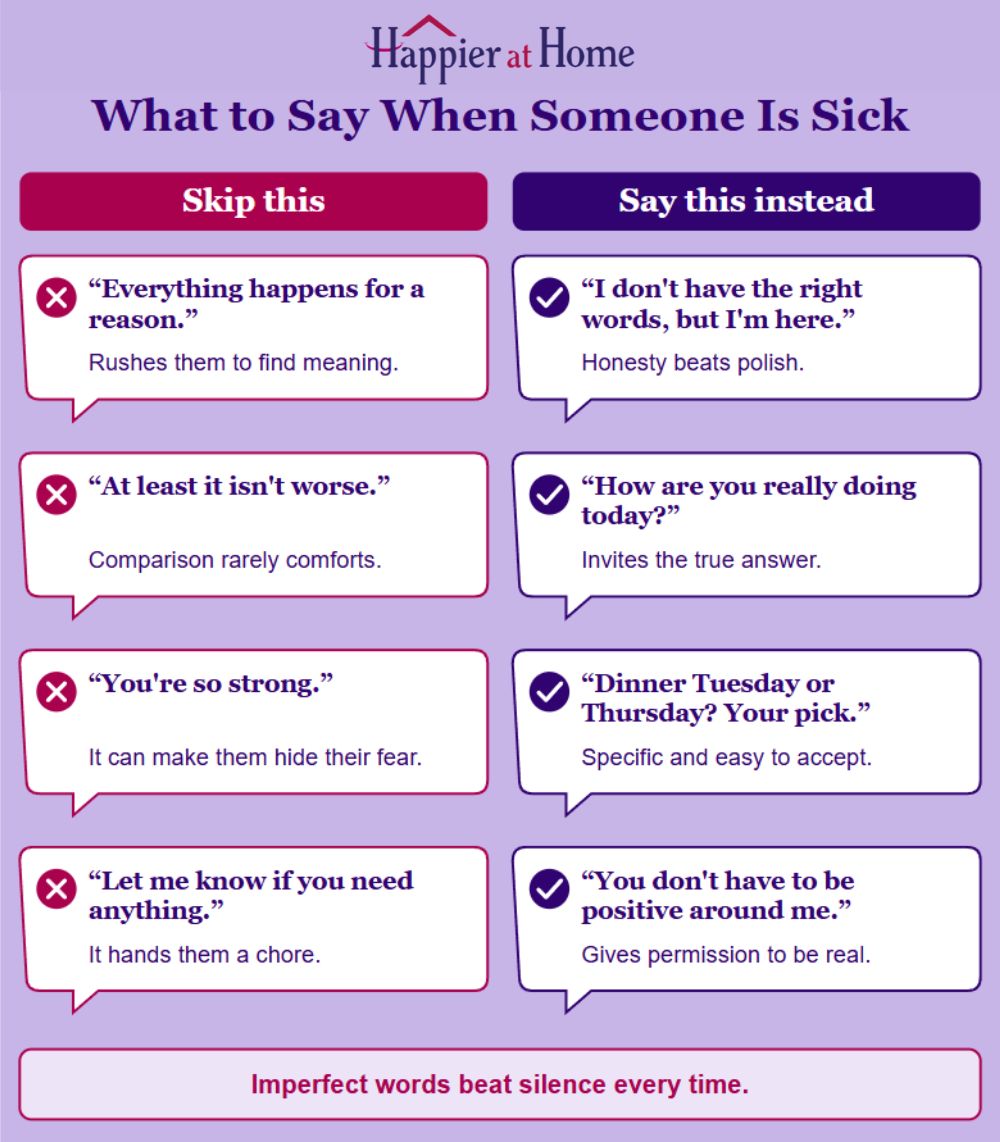
Most of us reach for clichés because silence feels unbearable, yet the most common phrases quietly minimize what the person is going through.
Phrases to skip:
- “Everything happens for a reason.” It asks them to find meaning before they are ready.
- “At least it isn’t worse.” Comparison rarely brings comfort.
- “You’re so strong.” It sounds kind, but it can pressure them to hide their fear.
- “Let me know if you need anything.” It hands a tired person a homework assignment.
What to say to someone who is sick instead:
- “I don’t have the right words, but I’m here.”
- “How are you really doing today?”
- “I can bring dinner Tuesday or Thursday. Which is better?”
- “You don’t have to be positive around me.”
How to Comfort Someone Who’s Sick Without Saying a Word

Comfort is often physical before it is verbal. A hand on the shoulder, a warm blanket, or a favorite song playing softly can say “you matter” without a single awkward word. Here are a few quiet ways to comfort a sick person:
- Hold their hand if they welcome it. Touch is often the first thing illness takes away.
- Bring a photo from before they got sick and place it where visitors can see it. It reminds everyone that this is a person with a full life.
- Ask about their story. Their career, their kids, the trip they still talk about. Let them be the expert on something again.
- Smile and say hello every time, even when they cannot respond.
ISeeU Blankets, a nonprofit started by ICU nurse Alexandra Marcello in Queens during the pandemic, shows how powerful this can be.
Each patient receives a handmade blanket that marks them as an individual, and grieving families later receive that same blanket as a keepsake (iseeublankets.com).
How to Help Someone Who Is Sick: Practical Ways to Show Up
Helping others during illness works best when the help is specific, scheduled, and effortless for the person receiving it. Vague offers put the burden on someone who is sick to ask. Specific offers remove it.
- Claim a task. Take over the laundry, the lawn, or the pharmacy run, and keep doing it without being asked.
- Send a voice note instead of a text. Hearing your voice feels closer, and it does not demand a reply.
- Drop and go. Leave a favorite snack or a cozy blanket on the porch with a note. No visit required.
- Offer the ride. Driving to the appointment and waiting in the lobby is a gift. When nobody is free, senior transportation services can send a caregiver who stays for the whole visit.
- Give the main caregiver a break. A spouse or adult child who never gets a day off will burn out. A few hours of in-home respite care each week protects them too.
- Fix the logistics. Sort the pill organizer, confirm the next appointment, and open the mail. For a loved one juggling many prescriptions, medication management support can remove a daily source of stress.
Don’t Make It About You, and Let Them Set the Tone
When a sick person opens up, resist the urge to respond with “that happened to my cousin too” or your own health scare. Validate what they said, stay quiet a beat longer than feels comfortable, and let them keep going.
Some days they will want to laugh and some days they will want to cry. Let them guide the emotional temperature with questions like “Do you want to talk about it today?” or “Would it help if I just kept you company while you rest?”
Match Your Support to the Illness
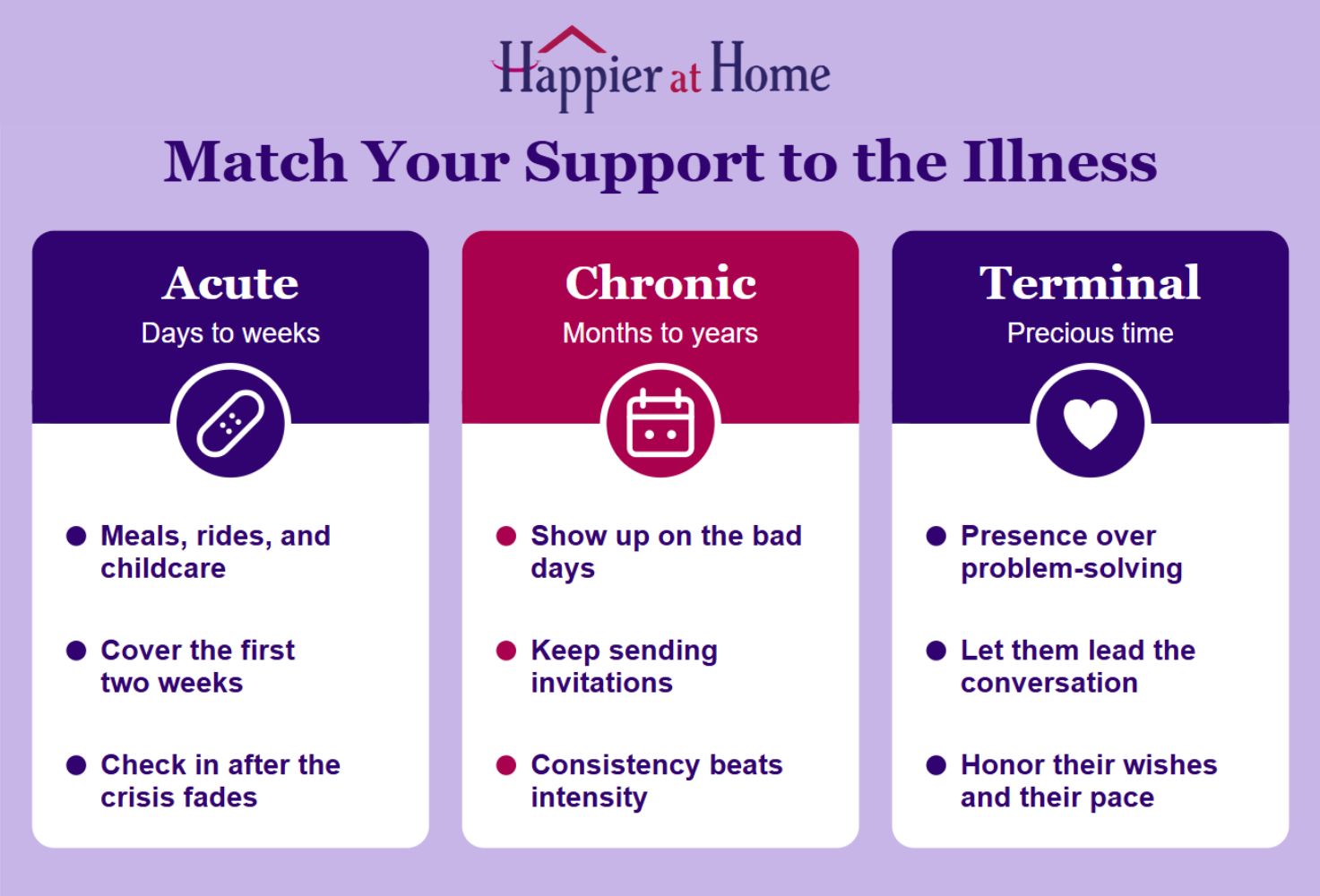
A broken hip, a long-term heart condition, and a terminal diagnosis all call for different kinds of help. The stage of illness tells you what matters most right now.
- Acute illness: Think meals, rides, and childcare for the first two weeks. Then check in again once the crisis fades and everyone else has moved on.
- Chronic illness: Show up on the bad days, keep sending invitations even when they say no, and choose consistency over intensity. Regular companion care for seniors can also provide the steady friendly face that chronic conditions demand.
- Terminal illness: Offer presence over problem-solving and let them lead every conversation. Families often lean on in-home hospice care during this season so they can spend their energy on time together rather than tasks.
Bible Verses About Caring for the Sick and Elderly
Many families draw strength from scripture during illness. These bible verses about caring for the sick and elderly are short enough to write in a card or read aloud at a bedside.
- Matthew 25:36 “I was sick, and ye visited me.”
- Psalm 41:3 “The Lord will strengthen him upon the bed of languishing.”
- Galatians 6:2 “Bear ye one another’s burdens.”
- Isaiah 46:4 “Even to your old age I am he; and even to hoar hairs will I carry you.”
- Leviticus 19:32 “Thou shalt rise up before the hoary head, and honour the face of the old man.”
- James 5:14 “Is any sick among you? let him call for the elders.”
Keep Showing Up After Everyone Else Stops

Support peaks in week one and collapses by month three, which is exactly when someone who is sick needs you most. Put a reminder on your calendar and treat it like any other appointment. A simple “Thinking of you today” text every Sunday means more than one grand gesture.
When John’s best friend was diagnosed with cancer, he stopped asking “How are you?” every week. Instead, he sent voice notes with silly stories, songs, and encouragement. She later told him those notes made her feel normal again, like a person rather than a patient.
For an aging parent who lives far away, showing up can also mean arranging help you cannot provide yourself. Reliable personal care services keep daily routines dignified, and a senior care advocate can sit in on doctor visits and report back to the family.
When Family Cannot Be There for a Sick Person Every Day

Helping the sick feel seen does not require you to do everything alone. Trusted senior home care services can cover the hours you cannot, from a short daily visit to 24 hour home care for a loved one who should never be alone.
Happier at Home caregivers are matched for continuity, so the same familiar face returns visit after visit. That consistency is its own form of being seen, and it frees families to show up as family rather than exhausted staff.
See Our Video on Making the Sick Feel Seen
Frequently Asked Questions
How often should I visit someone who is sick?
Ask them directly, then aim for short, predictable visits rather than long, rare ones. Twenty minutes twice a week usually beats two hours once a month, because illness drains energy quickly.
Should I bring children to visit a sick person?
Often yes, as long as the children are healthy and the patient agrees in advance. Kids bring lightness and normalcy, but keep the visit brief and prepare them for medical equipment or changes in appearance.
What should I bring when visiting someone in the hospital?
Soft socks, lip balm, a phone charger with a long cord, and a small photo from home are almost always welcome. Check with the nurses before bringing food or flowers, since some units restrict both.
What if the sick person does not want visitors?
Respect it without taking it personally. Shift to low-pressure contact like voice notes, mailed cards, or porch drop-offs, and let them know the door is open when they are ready.
How do I support a sick friend who lives far away?
Schedule standing phone or video calls, send meal delivery credits, and coordinate with local friends or a home care agency for in-person needs. Distance limits what you can do, not how seen you can make them feel.
Published June 2024 • Updated August 2026
Reviewed by Debbie Marcello, Founder & CEO of Happier at Home
This content is for informational use only and does not replace medical advice.