
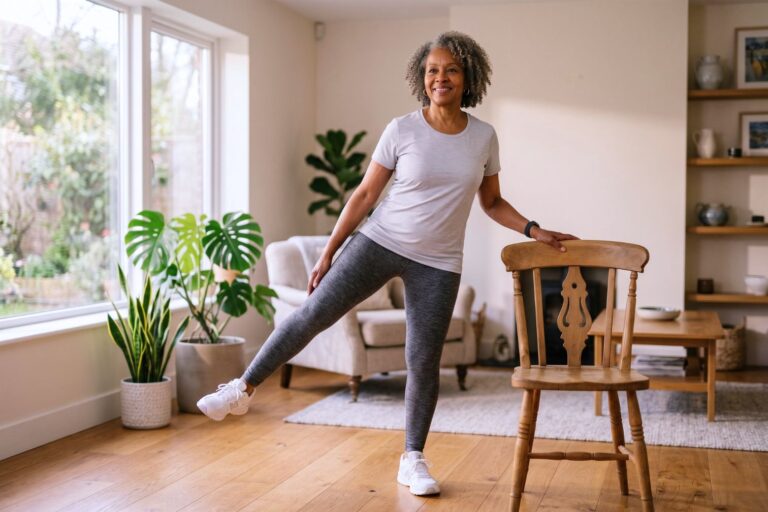
This guide breaks down why leg strength matters so much in later life, the most effective exercises to start today, and how to do them safely.
That small wobble after you stand up too fast. The hesitation before stepping off a curb. The grip on the railing that has become a little tighter lately.
These are not just signs of slowing down, they are signals from the body asking for attention. For older adults, the strength in your legs is the strength behind your independence. That is exactly why seniors must prioritize leg exercises for strength, and the sooner the better.
If you or a loved one needs extra support, the team at Happier at Home offers compassionate in-home senior care services that can make every step a little safer.
Why Weak Legs in Seniors Are a Threat to Independence
Falls are not a small problem in older age, they are a public health emergency. According to the Centers for Disease Control and Prevention, more than one in four adults aged 65 and older falls each year. Falls are also the leading cause of injury death in this age group.
Most of these incidents happen at home during ordinary activities like reaching, bending, or rising from a chair. The common thread is often weak lower-body muscles. When the thighs, hips, and calves lose strength, the body cannot react quickly enough to catch a stumble.
The encouraging news is that lower-body strength is something you can rebuild at any age. A consistent routine, paired with thoughtful personal care services, can dramatically lower the risk of a serious fall.
The Importance of Leg Strength of Seniors

Leg strength is connected to nearly every part of daily life. Standing up from the couch, walking the dog, climbing stairs, and getting out of the car all rely on the muscles below the waist. When those muscles fade, so does the freedom that comes with them.
After age 50, adults can lose 1 to 2 percent of muscle mass per year if they remain inactive. This natural process is called sarcopenia. Strength training is the most effective way to slow it down and even reverse it.
Strong legs deliver benefits that go beyond mobility:
- Better balance and faster reaction time when you trip or stumble
- Easier movement during daily tasks like dressing, cooking, and bathing
- Improved circulation, which supports heart and joint health
- More confidence to stay active socially and physically
- Reduced reliance on others for routine activities
For seniors who already need help with daily tasks, companion care services can make exercise feel less isolating and more enjoyable. A trusted companion encourages consistency, and consistency is where progress happens.
The Best Leg Exercises for Seniors at Home

You do not need a gym, weights, or fancy equipment to build leg strength. The five exercises below use only a sturdy chair, a wall, and a clear space. Each one targets a key muscle group that supports balance, walking, and standing.
Always check with your doctor before starting a new routine, especially if you have heart conditions, joint pain, or recent surgery. A senior care advocate can help coordinate this conversation with your healthcare team.
1. Seated Leg Raises
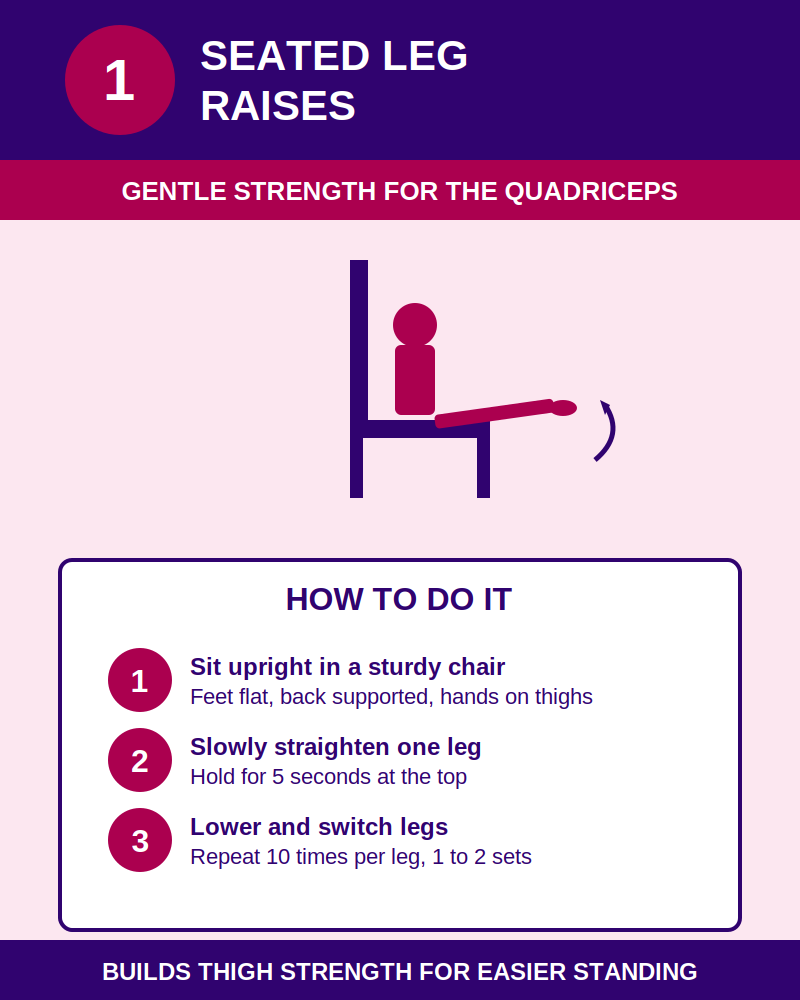
This is the gentlest place to start. Seated leg raises wake up the quadriceps, the large muscles on the front of your thighs that power standing and stair climbing.
2. Chair Squats
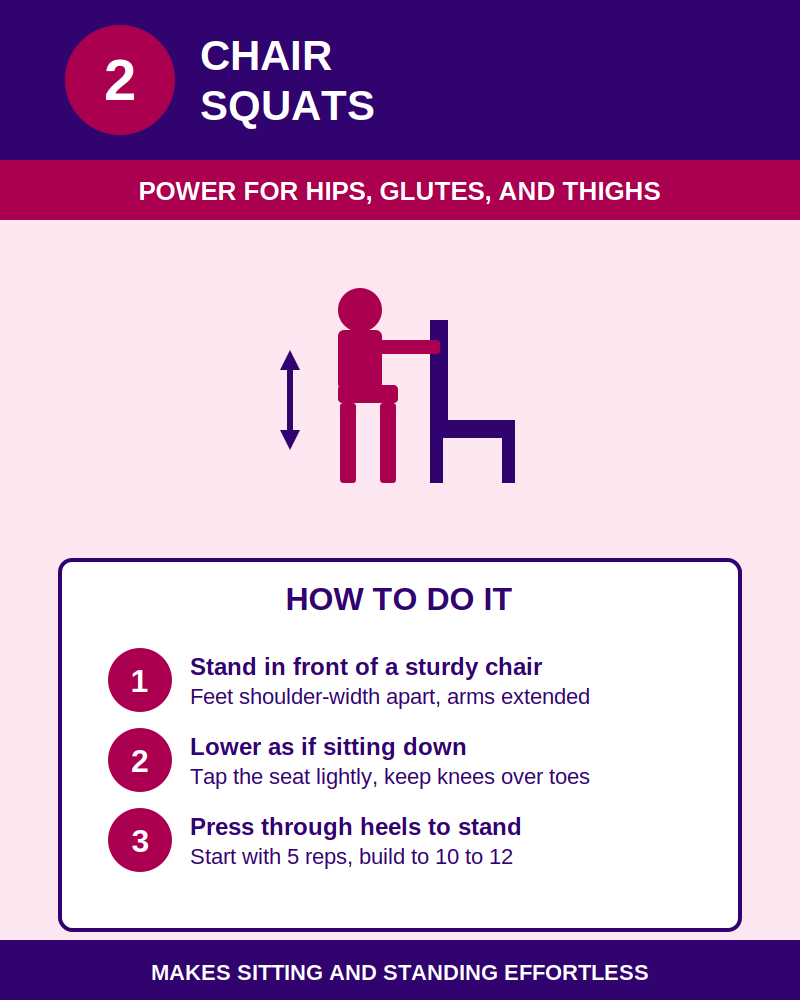
Chair squats train the exact movement you do dozens of times every day. They build strength in the glutes, quadriceps, and hamstrings together, which makes getting up from low surfaces feel almost effortless.
3. Heel Raises
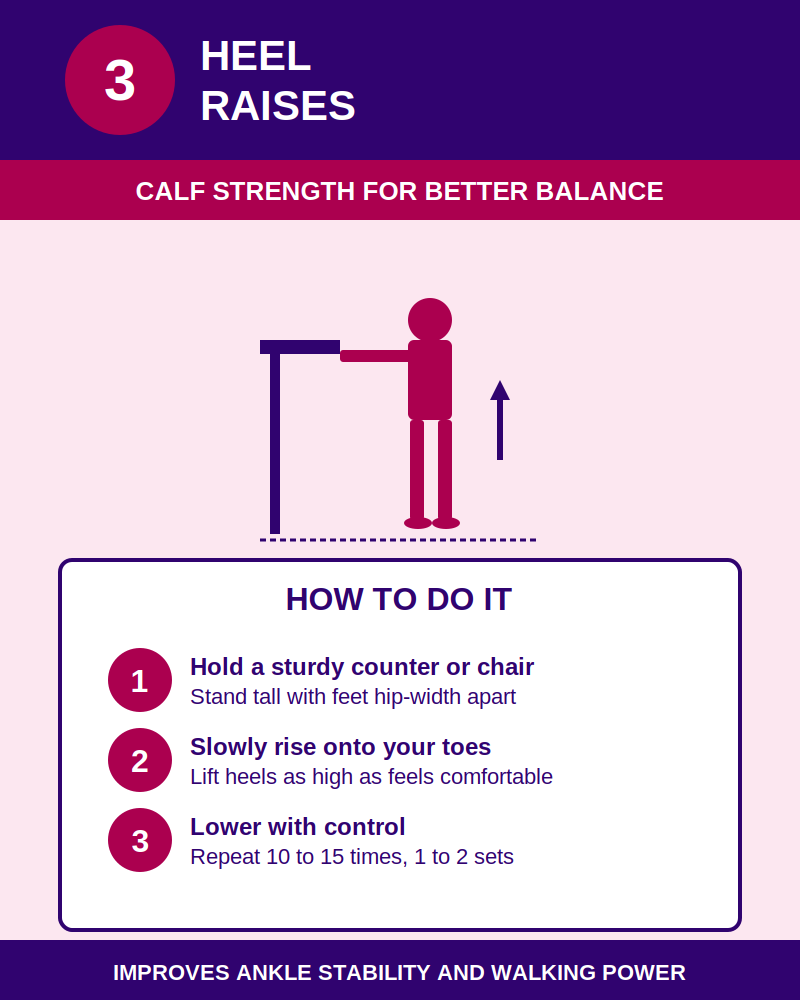
Strong calves are essential for steady walking and quick balance recovery. Heel raises also support better blood flow from the legs back to the heart, which can ease swelling.
4. Standing Side Leg Lifts
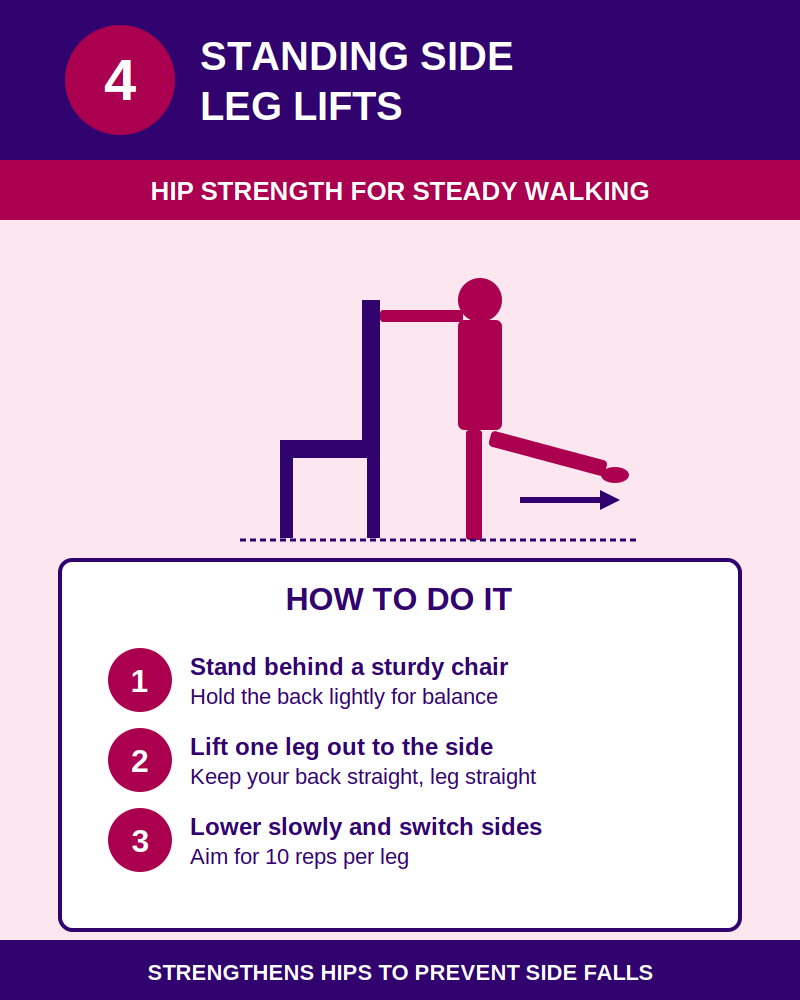
This move targets the hip abductors, the muscles that keep you from tipping sideways. Strong hips are one of the best defenses against side falls, which often cause hip fractures.
5. Wall Sits
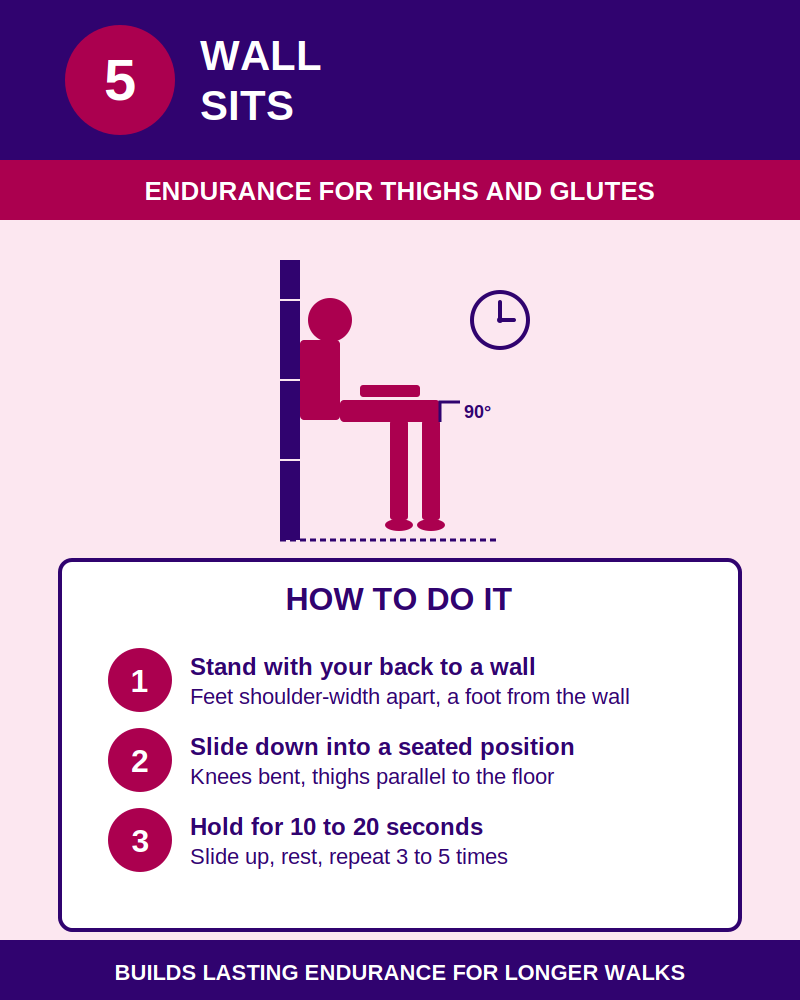
Wall sits are a quiet powerhouse of an exercise. They build endurance in the thighs and glutes without any jumping, lifting, or strain on the joints, which makes them ideal for seniors at any fitness level.
Tips for Doing Leg Strengthening Exercises for seniors at Home
Building strength is a marathon, not a sprint. The goal is steady gains over weeks and months, not soreness or exhaustion in a single session.
Use these guidelines to stay safe and consistent:
- Start with two short sessions per week and add a third when you feel ready.
- Focus on slow, controlled movement instead of speed or repetitions.
- Keep water nearby and rest as often as needed.
- Wear supportive shoes with good grip, even indoors.
- Stop immediately if you feel sharp pain, dizziness, or shortness of breath.
A trained caregiver can be a powerful partner in this journey. For families managing complex schedules or recovery from a hospital stay, 24 hour home care provides round-the-clock peace of mind.
What the Research Says About Strength Training
Multiple studies confirm that resistance training reduces fall risk in older adults. Programs that combine balance work with strength exercises tend to deliver the strongest results, sometimes cutting fall rates by a third or more.
Even better, strength training has been shown to improve cognitive health, mood, and sleep quality. The effects ripple far beyond the legs themselves. For seniors managing multiple medications, pairing exercise with reliable medication management solutions creates a strong foundation for healthy aging.
Progress can be subtle at first. You may notice you stand up without using your hands, or that stairs feel less daunting. Those small wins add up to real independence.
When to Ask for Help with Leg Exercises for Seniors at Home
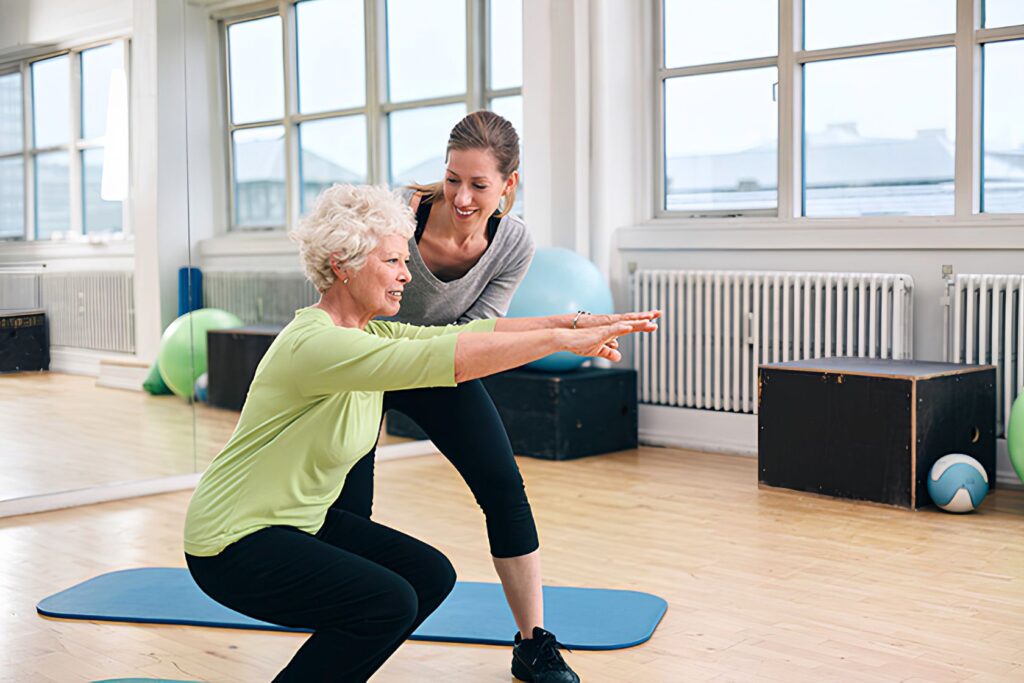
Not every senior should exercise alone, and that is perfectly okay. Some signals suggest it is time to bring in extra support from a professional or family caregiver.
Consider reaching out for help if any of the following apply:
- Recent falls or near-falls in the past six months
- Difficulty getting in or out of a chair without assistance
- Recovery from a recent surgery, stroke, or hospitalization
- Memory changes that make following an exercise routine challenging
- Living alone with limited family nearby
Happier at Home is here to help families navigate these moments. Our caregivers can support a loved one through their exercise routine, errands, meals, and more. You can find a home care agency near you or visit our getting started page to learn how care begins.
Stronger Legs, Stronger Life
The path to safer steps is not about pushing harder, it is about showing up consistently. A few minutes of focused leg work, repeated several times a week, can change the way you move through the world.
Independence is built one rep at a time. Start small, stay patient, and keep moving forward.
Frequently Asked Questions About Leg Exercises for Seniors
How often should seniors do leg exercises each week?
Most experts recommend two to three sessions per week with at least one rest day in between. This gives the muscles time to repair and grow stronger. Short sessions of 15 to 20 minutes are often more sustainable than long workouts.
Are leg exercises safe for seniors with arthritis?
Many low-impact exercises like seated leg raises and heel raises are gentle on the joints and can actually reduce arthritis pain over time. The key is to move within a comfortable range and avoid positions that cause sharp pain. Always check with your healthcare provider before beginning a new routine.
What is the difference between strength training and balance training?
Strength training builds the muscles you use to move, while balance training trains your body to stay upright and recover from missteps. Both are important and they work best together. Many of the exercises in this guide do double duty.
Can a caregiver help with home exercises?
Yes, and it is one of the most valuable things a caregiver can do. A trained caregiver from Happier at Home can encourage consistency, help with safe form, and provide reassurance during balance work. Learn more about non medical home care or browse helpful articles in our resources library.
How long does it take to see improvement in leg strength?
Many seniors notice better balance and easier movement within four to six weeks of consistent practice. Visible muscle changes may take longer, but the functional benefits often come first. The key is sticking with it, and that is where steady support truly matters.
Published June 2024 • Updated May 2026
Reviewed by Debbie Marcello, Founder & CEO of Happier at Home
This content is for informational use only and does not replace medical advice.