
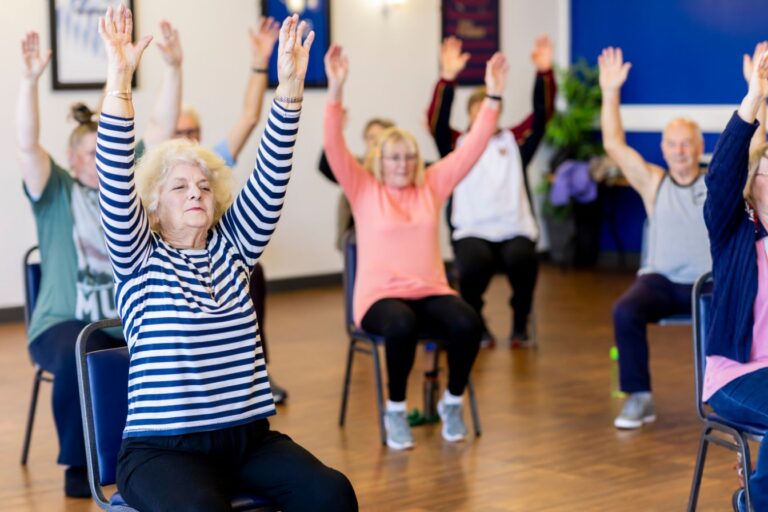
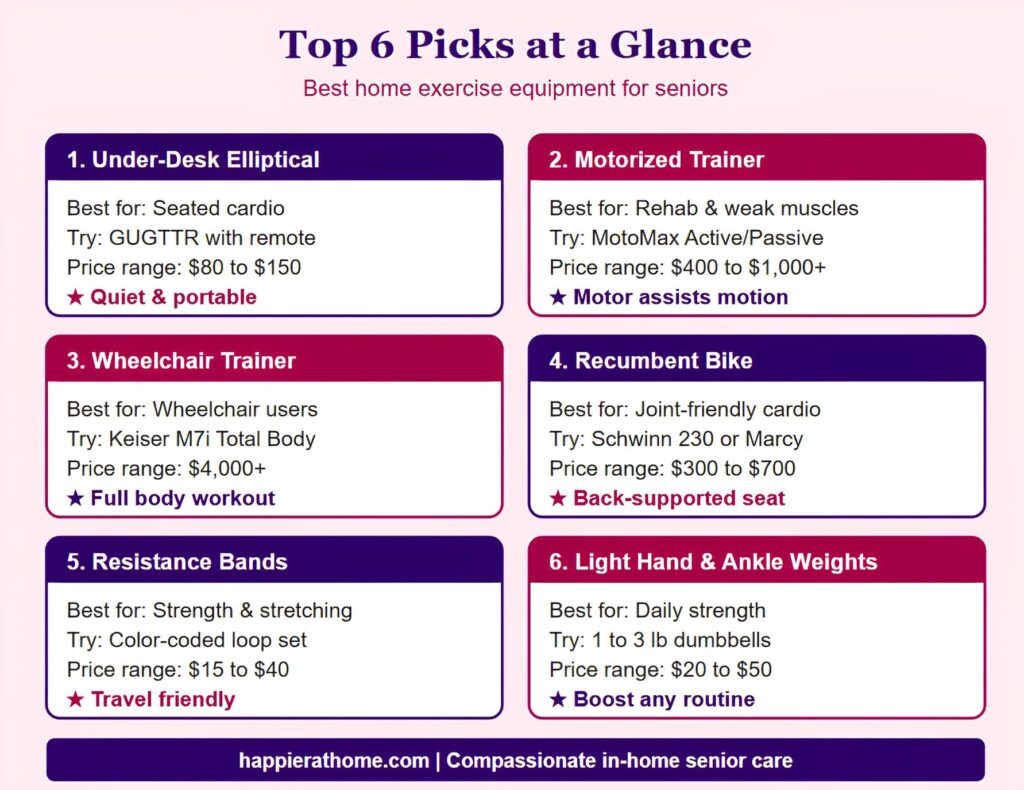
Quick answer: Some of the best exercise equipment for seniors with limited mobility includes under-desk ellipticals like the GUGTTR pedal exerciser, motorized active and passive trainers such as the MotoMax, wheelchair-friendly total body machines like the Keiser M7i, recumbent bikes, and color-coded resistance bands. These tools support seated workouts, protect joints, and make daily movement realistic for almost any ability level.
Movement is medicine, but for older adults living with stiff joints, balance issues, or limited stamina, walking into a crowded gym is rarely the answer.
The good news is that the right tools brought right into the living room can rebuild strength, ease pain, and protect independence without ever stepping outside the front door. The challenge is knowing which products actually deliver and which ones end up gathering dust.
Why Daily Home Workouts for Seniors Matters After 65
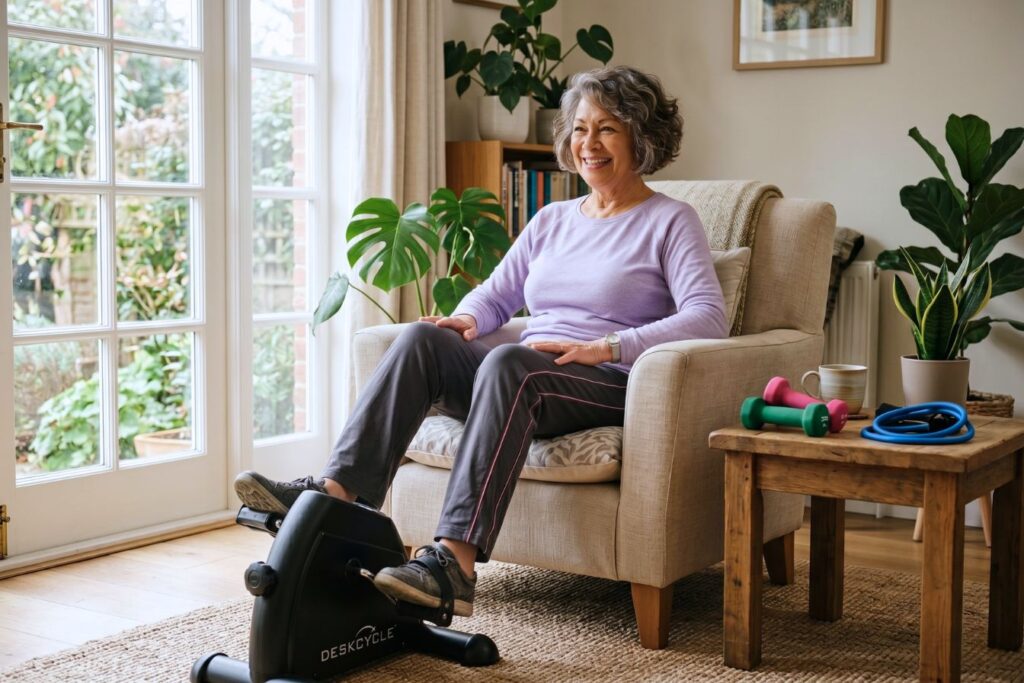
Sitting for long stretches accelerates muscle loss, stiffens joints, and quietly raises the risk of falls. Even gentle, consistent activity reverses much of that damage.
The National Institute on Aging confirms that regular activity helps adults stay strong, balanced, and independent.
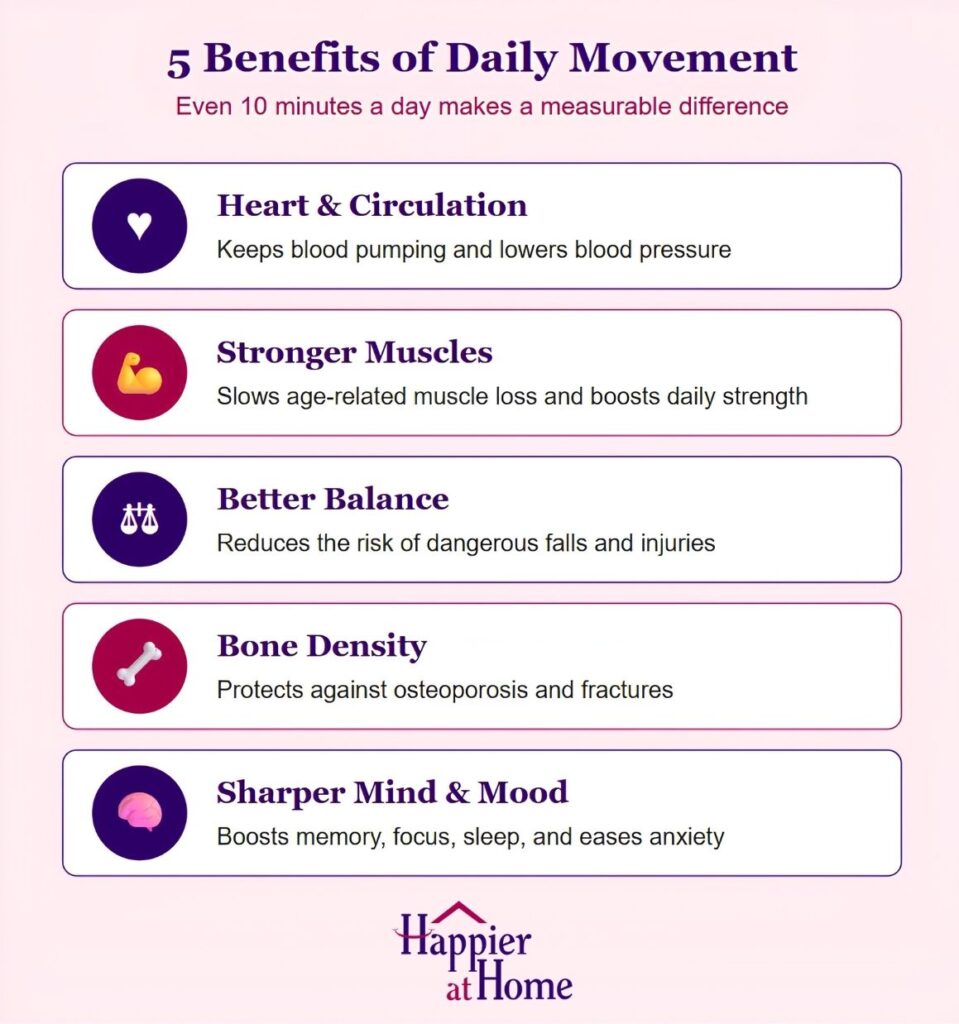
The benefits stack up quickly when seniors stick with a routine:
- Less joint stiffness and lower back pain
- Better circulation and heart health
- Preserved muscle tone and bone density
- Sharper mood, sleep, and cognitive function
- Greater confidence with daily tasks like stairs and groceries
You do not need an hour a day. Five to fifteen minutes of low impact movement, repeated most days, can change how someone feels by month’s end.
What to Look for in Elderly Fitness Equipment
Not every machine on the market is built with older bodies in mind. The right pick balances safety, simplicity, and genuine usefulness.
Stability and Safety
A wide, weighted base is non-negotiable. Look for slip-resistant feet, padded grips, and a frame that does not wobble during use. If standing balance is a concern, a seated machine is almost always the safer pick.
Ease of Use
Tiny digital displays and complicated apps frustrate everyone, especially seniors with limited dexterity or vision. Large buttons, a clear screen, and remote control options make a daily habit much more likely to stick.
Footprint and Storage
Compact equipment fits beside an armchair or under a bed. If a machine has to be hauled out of a closet each time, it probably will not be used.
Seated and Wheelchair-Friendly Design
The best elderly fitness equipment works for users who can stand and for those who cannot. Seated pedal trainers, table-top arm cycles, and wheelchair-accessible total body machines open the door to exercise for those who otherwise feel locked out.
A personal care assistant can help you find the best fit for your needs.
The Best Home Exercise Equipment for Seniors
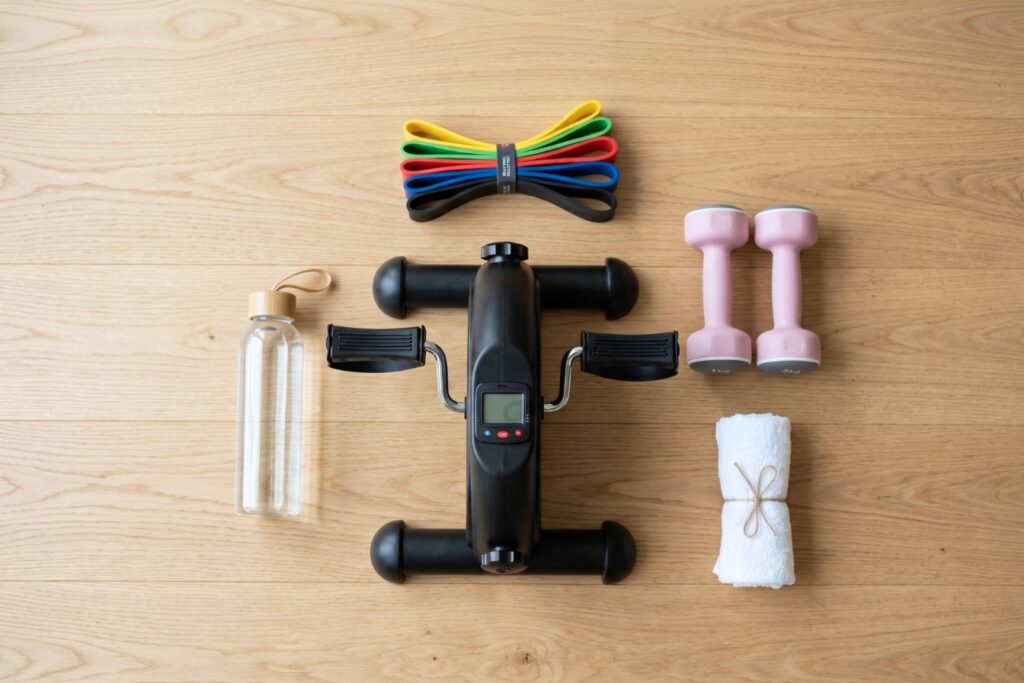
Here are the standout categories of low impact exercise machines for older adults, with specific models that consistently earn strong reviews from users, therapists, and caregivers.
1. Under-Desk Ellipticals (Pedal Exercisers)
These tucked-away pedalers let users move their legs while seated in a recliner, dining chair, or wheelchair. They are quiet, affordable, and one of the easiest entry points into a routine.
The GUGTTR Under-Desk Elliptical is a top pick. It offers 12 speed levels, near-silent operation, and a remote control so users do not have to bend down. That makes it the best leg exerciser for elderly users who want gentle cardio without leaving their seat.
2. Motorized Active and Passive Trainers
These machines move the legs or arms even when the user cannot generate the strength to do so independently. The motor does the work, then gradually steps back as muscles wake up.
The MotoMax Active and Passive Trainer handles both upper and lower body workouts from a seated position. It is widely used in stroke recovery, Parkinson’s care, and post-surgical rehab as a leg exercise machine for elderly clients who need help getting started.
3. Wheelchair-Compatible Total Body Trainers
For wheelchair users who cannot transfer to a standard machine, full-body trainers built around the chair are a game changer.
The Keiser M7i Total Body Trainer rolls right up to the user. It offers smooth pneumatic resistance, ergonomic grips, and dual arm and leg motion. It is serious exercise equipment for elderly wheelchair users who want a real workout.
4. Recumbent Exercise Bikes
The best exercise bike for seniors usually is not upright. A recumbent bike puts the rider in a reclined chair-like seat with back support, eliminating pressure on the lower back and reducing fall risk. Models like the Schwinn 230 and Marcy ME-709 stay popular year after year.
5. Resistance Bands
Color-coded loop and tube bands cost less than dinner out and travel anywhere. They work for seated rows, leg extensions, shoulder presses, and gentle stretching. Start with the lightest band and step up only when the movement feels easy.
6. Light Hand Weights and Ankle Weights
One to three pound dumbbells preserve grip strength and shoulder stability. Adjustable ankle weights add gentle resistance to seated leg lifts and marching in place. Both are inexpensive staples of effective home workouts for seniors.
How to Match Low Impact Exercise Machines With Personal Goals
Buying the right machine starts with knowing what the user actually needs. A wheelchair user has different needs than someone recovering from a knee replacement.
- Gentle cardio: under-desk elliptical or recumbent bike
- Muscle maintenance: resistance bands or light hand weights
- Assisted movement after injury: motorized active and passive trainer
- Wheelchair-friendly full body work: Keiser M7i or similar total body trainer
- Better balance: ankle weights paired with seated leg lifts and marching
If a doctor or physical therapist has shared a plan, follow it. If not, ask at the next visit.
Safety Tips for Seniors Exercising at Home
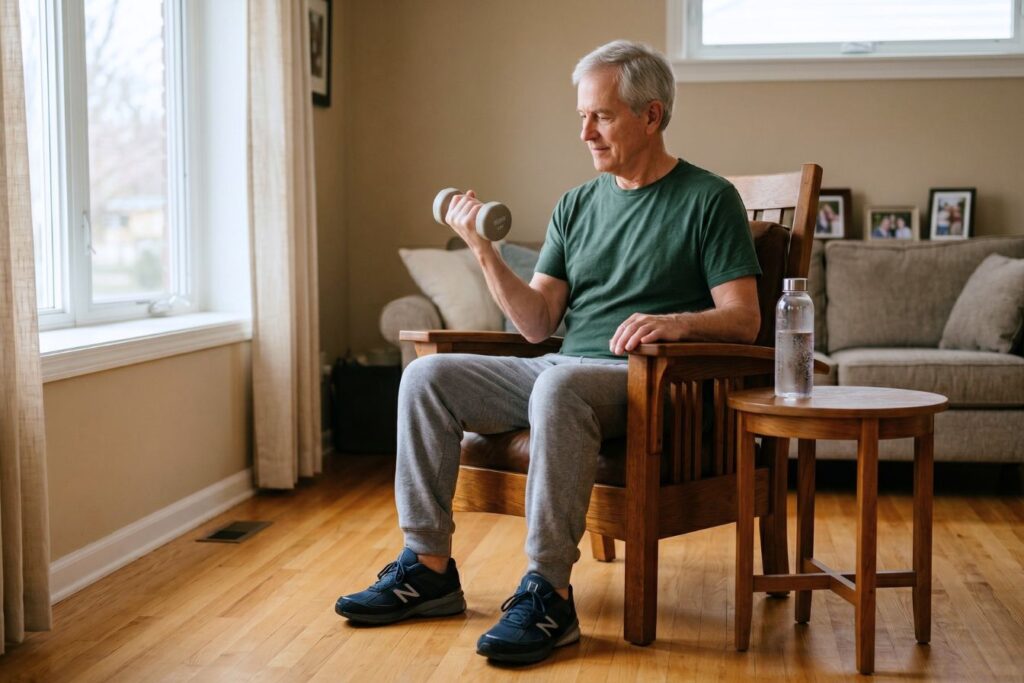
Even the gentlest equipment can cause injury when used carelessly. A few simple habits keep things safe.
- Start slow, then gradually add time, resistance, or repetitions
- Clear the workout space of rugs, cords, and clutter
- Use a sturdy, armed chair if standing balance is a concern
- Keep water within arm’s reach and pause if you feel lightheaded
- Wear supportive, closed-toe shoes, never slippers or socks alone
- Stop and call a doctor for chest pain, sharp joint pain, or unusual shortness of breath
For older adults living alone, having someone nearby during workouts adds peace of mind. Families often arrange companion care services so a trained caregiver can encourage exercise and watch for warning signs.
Building a Workout Routine for Seniors That Actually Sticks
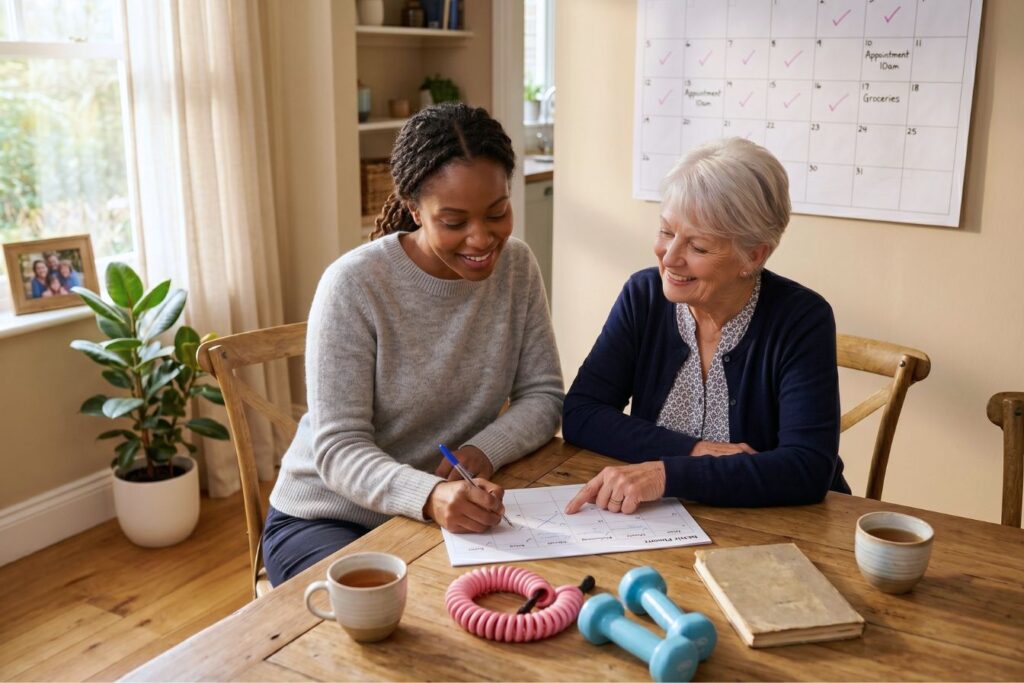
The best machine in the world is useless if it lives in a closet. Consistency comes from making movement convenient and predictable.
Three habits help an exercise routine stick:
- Anchor it to something you already do. Pedal during the morning news. Use bands during a favorite show.
- Track it visually. A wall calendar with a checkmark for each session creates a small daily reward.
- Start absurdly small. Five minutes is a win. Showing up is the goal.
For seniors managing several chronic conditions, fitting exercise into the day can feel overwhelming. A geriatric care advocate can build a realistic plan that includes movement, rest, and medication management.
For those needing round-the-clock support, 24-hour home care ensures someone is always there to encourage activity safely.
When to Consider Extra Help With Low Impact Exercise Machines at Home
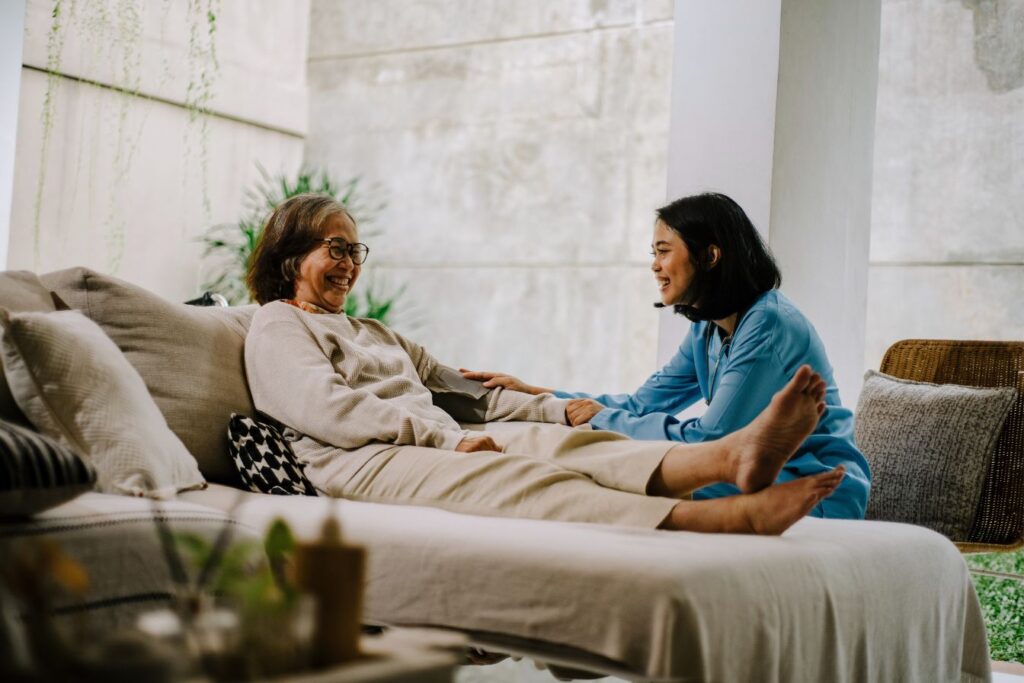
Some seniors thrive with a few pieces of equipment and a supportive family. Others need more hands-on guidance to stay safe and motivated.
Watch for these signs that extra support might help:
- Frequent near-falls or fear of falling
- Skipping exercise because of fatigue or low motivation
- Difficulty getting in and out of chairs without help
- Recent hospitalization or surgery
In those cases, home support or in home hospice care can mean the difference between giving up and getting stronger. Families unsure what level of help they need can learn more about getting started with home care or browse home care agencies near you.
Movement Is Independence in Disguise
Limited mobility does not mean the end of staying active. With the right tools and a little encouragement, seniors can keep moving in ways that protect independence and lift mood. The best equipment is simply the one that gets used most days, paired with the right support at home.
Click here to see a video about staying active with limited mobility.
Frequently Asked Questions About Home Workouts for Seniors
How much should a senior with limited mobility exercise each day?
Most experts recommend starting with 10 to 15 minutes of gentle movement daily and building from there. Even short sessions, repeated five or six days a week, deliver real benefits. Quality and consistency beat marathon workouts every time.
Are pedal exercisers safe for someone with arthritis?
Yes, in most cases. Seated pedal exercisers create smooth, low impact motion that often eases arthritic stiffness rather than aggravating it. Start with the lowest resistance and stop if a joint feels sharp pain rather than the usual ache.
Can someone with dementia use home exercise equipment?
Often yes, with supervision. Simple repetitive equipment like pedal exercisers and resistance bands works well because it does not require complex memory or sequencing. A caregiver should be present to demonstrate, encourage, and watch for fatigue or confusion.
Will Medicare or insurance pay for home exercise equipment?
Standard Medicare rarely covers basic equipment like pedal exercisers or resistance bands. However, durable medical equipment prescribed for rehab after surgery or stroke may qualify under certain plans. Always check with the plan administrator and ask the doctor to write a letter of medical necessity.
What is better for seniors, a treadmill or a recumbent bike?
For most seniors with limited mobility, a recumbent bike wins. The seated position protects the lower back, removes fall risk, and is much easier on knees and hips. Treadmills can still work for active, balanced seniors, but they carry a higher risk of falls.
Published June 2024 • Updated May 2026
Reviewed by Debbie Marcello, Founder & CEO of Happier at Home
This content is for informational use only and does not replace medical advice.