

The promise of the world wide web was connectivity. In many ways that has been achieved. Yet, despite a digital connection to everyone in the world, there is a growing loneliness epidemic.
Seniors are affected by loneliness more than most because they’re retired from work, their aging friends pass on, and they’re more likely to have challenges going out due to health reasons.
Understanding the Loneliness Epidemic Among Seniors
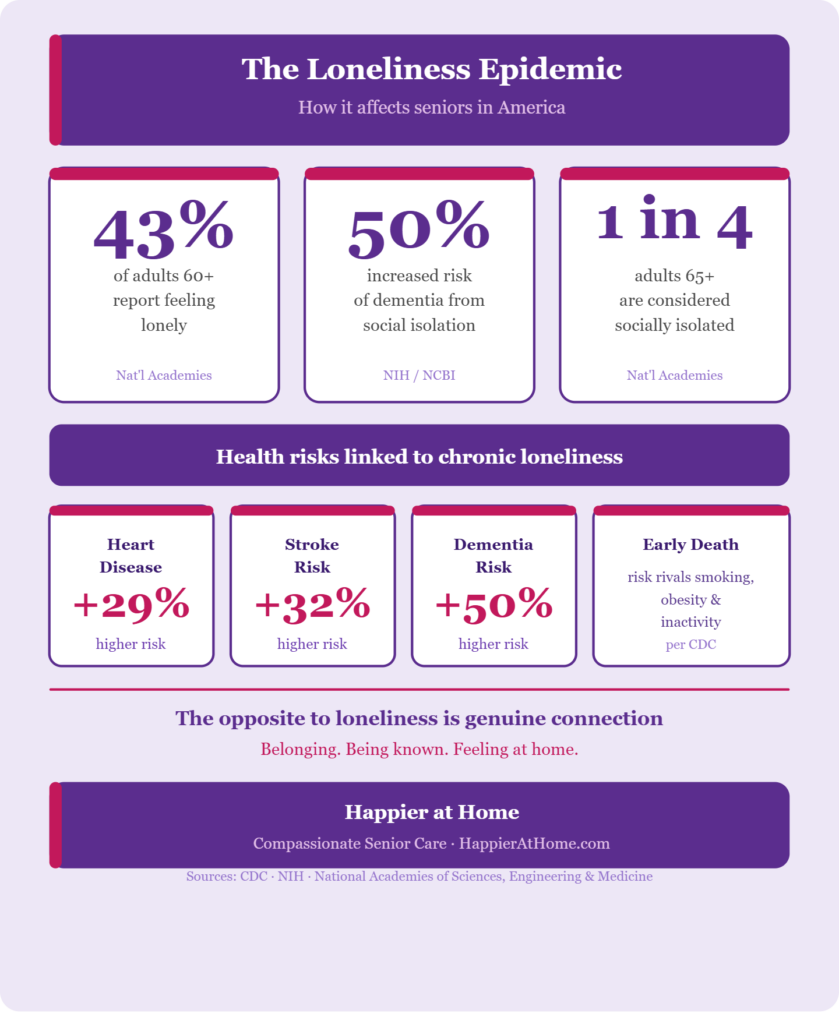
Loneliness is not simply a feeling of being alone. The U.S. Surgeon General officially declared loneliness a public health crisis, and the data backs it up.
According to the CDC, about 1 in 3 adults in the United States report feeling lonely, and nearly 1 in 4 report lacking social and emotional support. For those over 60, the numbers are even starker.
Research from the National Academies of Sciences, Engineering, and Medicine found that 43% of adults aged 60 and older report feeling lonely.
Reasons Seniors are disproportionately affected by the loneliness epidemic:
- Retirement removes the daily structure and social contact that work provides.
- Friends and spouses pass away, shrinking the inner circle.
- Mobility challenges, chronic illness, and loss of driving privileges make it harder to leave the home.
The result is a kind of slow isolation that is easy to miss until it has taken a serious toll.
It is important to understand that social isolation and loneliness are not the same thing. A person can be surrounded by people and still feel profoundly alone.
That is loneliness. And someone living quietly by themselves may not feel lonely at all. What matters most is the gap between the connection a person desires and the connection they actually have.
What Chronic Loneliness Does to the Body and Mind

Feeling lonely occasionally is a normal human experience. But when loneliness becomes a persistent state stretching across weeks, months, or years, it crosses into what researchers call chronic loneliness.
This sustained form of isolation causes measurable harm to physical and mental health in ways that rival the dangers of smoking or obesity.
The CDC reports that social isolation significantly increases the risk of heart disease, stroke, type 2 diabetes, depression, anxiety, and early death.
Research published by the National Institutes of Health found that social isolation is associated with roughly a 50% increased risk of developing dementia, a 29% increased risk of heart disease, and a 32% increased risk of stroke. For seniors already managing health conditions, chronic loneliness compounds those challenges and accelerates decline.
On the mental health side, chronic loneliness feeds depression and anxiety in a damaging loop. The lonelier a person feels, the less motivated they become to reach out. The less they reach out, the lonelier they become.
Breaking that cycle early, ideally with the help of family or a companion caregiver makes an enormous difference in the outcome.
Why Seniors Are Especially Vulnerable to the Loneliness Epidemic
Older adults face a unique combination of factors that make them more susceptible to the loneliness epidemic than younger generations. The loss of a spouse is perhaps the most significant.
For someone who spent 40 or 50 years sharing daily life with a partner, the silence that follows that loss is overwhelming. No app or social media platform replaces the warmth of that kind of presence.
Retirement, while celebrated, is another transition that quietly removes social scaffolding. Work provides a reason to get up, places to go, and people to talk to every day.
When that structure disappears, many seniors find themselves without a daily rhythm or regular social interaction. This is especially true for seniors who do not have family nearby or strong neighborhood ties.
Physical limitations add another layer of difficulty. Seniors dealing with mobility challenges, vision loss, hearing impairment, or chronic pain often find it harder to participate in social activities they once enjoyed.
Our personal care services are specifically designed to help seniors maintain their independence and stay connected to the community despite these challenges.
The Opposite to Loneliness: What Connection Really Means

When people search for the opposite of loneliness, they often assume it is simply “being around other people.” But psychologists and sociologists point to belonging. The true opposite to loneliness is feeling genuinely known, welcomed, and valued by at least one other person or community.
This distinction matters practically. A senior attending a busy senior center every week may still feel profoundly lonely if no one there really knows them.
Meanwhile, a senior with one dedicated companion care relationship, someone who shows up consistently and pays genuine attention, can feel deeply connected even if their social world is small.
Connection is built through consistency, vulnerability, and shared experience. It happens when someone calls just to check in, not because they have to. It grows through shared meals, routines, stories told and retold, and the quiet knowledge that someone out there is thinking about you.
For seniors, building these kinds of bonds requires intentional effort. And sometimes it requires family members or professional caregivers to help create the structure that makes it possible.
How to Cope With Loneliness: 8 Strategies That Actually Work
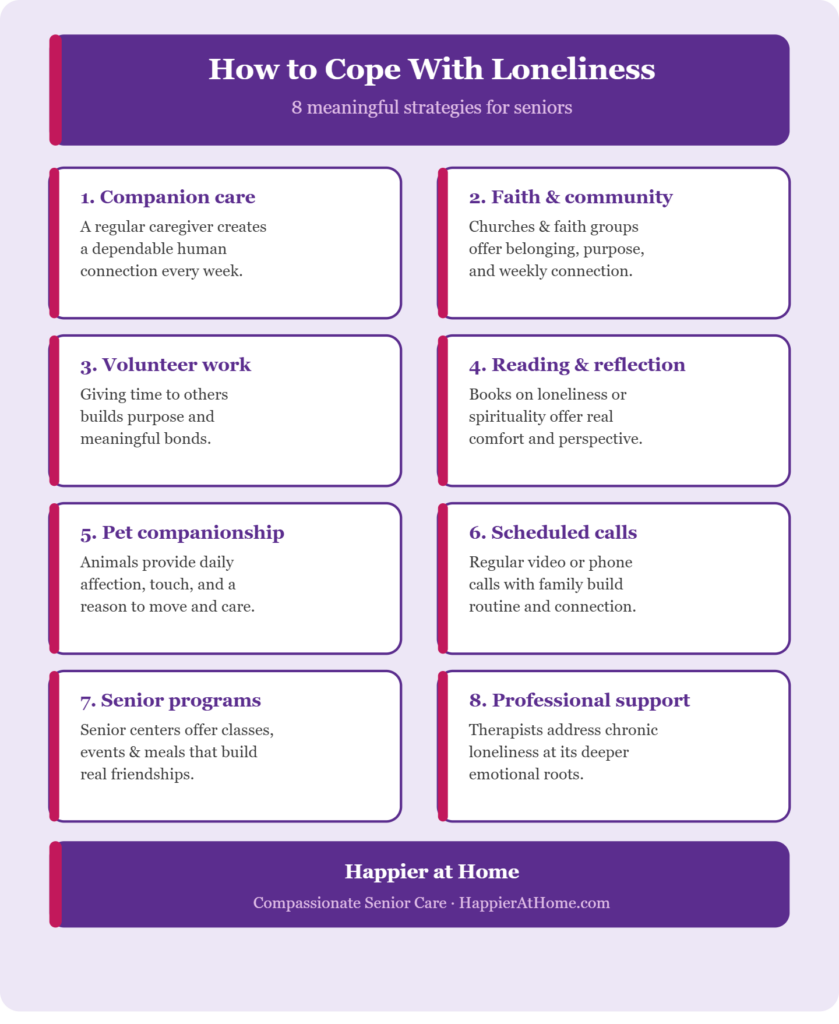
Learning how to cope with loneliness is not about forcing cheerfulness or pretending the pain is not real. It is about making consistent, small moves toward the light. The following strategies are grounded in research and shaped by the realities of senior life.
1. Invest in companion care
A professional caregiver is not just a practical helper, they are a consistent human presence. Companion care provides regular in-home visits that build relationships over time.
Seniors who have the same caregiver visit reliably often develop genuine friendships that meaningfully reduce loneliness.
2. Stay connected through faith communities
Churches, synagogues, mosques, and other faith communities offer something rare: a gathering place where everyone is welcomed, and where showing up is expected.
For many seniors, faith communities are the most natural and comfortable social environment available. Many congregations have programs specifically for older members, including rides to services, phone call ministries, and meal visits.
3. Volunteer
Giving time to others redirects attention outward and creates a powerful sense of purpose. Whether it is reading to children at the library, supporting a food bank, or tutoring at a community center, volunteering introduces seniors to new people and environments.
Research consistently shows that volunteering reduces feelings of isolation and improves overall wellbeing in older adults.
4. Establish scheduled calls with family
Spontaneous contact is meaningful, but scheduled calls are more reliable. When a grandchild calls every Sunday at 2 p.m., a senior has something to look forward to and a rhythm to their week.
Video calls through tablets or phones allow face-to-face connection that makes a meaningful difference over voice-only calls.
5. Adopt a pet
Animals offer consistent, unconditional companionship. For seniors who are able to care for one, a dog or cat provides daily physical touch, a reason to move around, and a living presence in the home.
Studies have shown that pet ownership reduces cortisol levels, lowers blood pressure, and significantly decreases feelings of loneliness in older adults.
6. Join senior center programs
Local senior centers offer far more than bingo. Many run fitness classes, art workshops, cooking groups, day trips, and educational lectures.
These recurring activities build familiarity over time and familiarity is the foundation of friendship. Our services can help seniors with transportation to reach these programs when driving is no longer an option.
7. Seek professional support
Chronic loneliness sometimes has roots in depression, grief, or trauma that needs professional attention. A therapist or counselor can help a senior understand why connection feels difficult and build real skills for overcoming those barriers.
Geriatric care advocacy team can help families connect loved ones with appropriate mental health resources.
8. Read and reflect
Books about loneliness, personal essays, memoirs, and spiritual writing can be surprisingly healing. Knowing that others have felt exactly what you feel and have found their way through is a powerful form of comfort. More on books about loneliness below.
Loneliness Quotes That Offer Comfort and Perspective
ometimes the right words at the right moment can shift something inside us.
Here are 8 inspiring quotes about overcoming loneliness:
“Loneliness does not last forever when you keep your heart open to connection.”
“The first step out of loneliness is often the brave choice to reach for someone else.”
“Even in quiet seasons, your life still has meaning, value, and the power to touch others.”
“Healing from loneliness begins when you remember that being alone is not the same as being forgotten.”
“A single conversation, a small kindness, or one new friendship can change everything.”
“Hope grows when we let ourselves be seen, heard, and loved.”
“The way through loneliness is built one moment of courage and connection at a time.”
“You are never too old, too far gone, or too late to find companionship and joy again.”
Bible Verses About Loneliness: Hope From Scripture
For seniors whose faith is central to their identity, scripture can be a profound source of comfort during seasons of loneliness. These Bible verses about loneliness speak directly to the experience of feeling forgotten, unseen, or alone.
“The Lord himself goes before you and will be with you; he will never leave you nor forsake you. Do not be afraid; do not be discouraged.” — Deuteronomy 31:8
This verse has comforted countless people through grief and isolation. The promise that God is present even when human company is scarce speaks directly to the deepest form of loneliness.
“Even though I walk through the darkest valley, I will fear no evil, for you are with me.” — Psalm 23:4
Psalm 23 is among the most beloved passages in scripture, and this line captures the experience of feeling accompanied through difficulty. Many seniors find that praying or reciting this Psalm brings immediate comfort.
“God sets the lonely in families.” — Psalm 68:6
This verse offers a beautiful picture of what the opposite to loneliness looks like in a community of faith. It is a reminder that belonging is something God actively works to create.
“Come to me, all you who are weary and burdened, and I will give you rest.” — Matthew 11:28
Chronic loneliness is a form of weariness that runs deep. This invitation from Jesus speaks to seniors who are tired of fighting isolation alone and who need a reminder that they do not have to.
For seniors who find these Bible verses about loneliness meaningful, sharing them with family, a caregiver, or a pastor can be a powerful way to open conversations about how they are really feeling.
Books About Loneliness Worth Reading
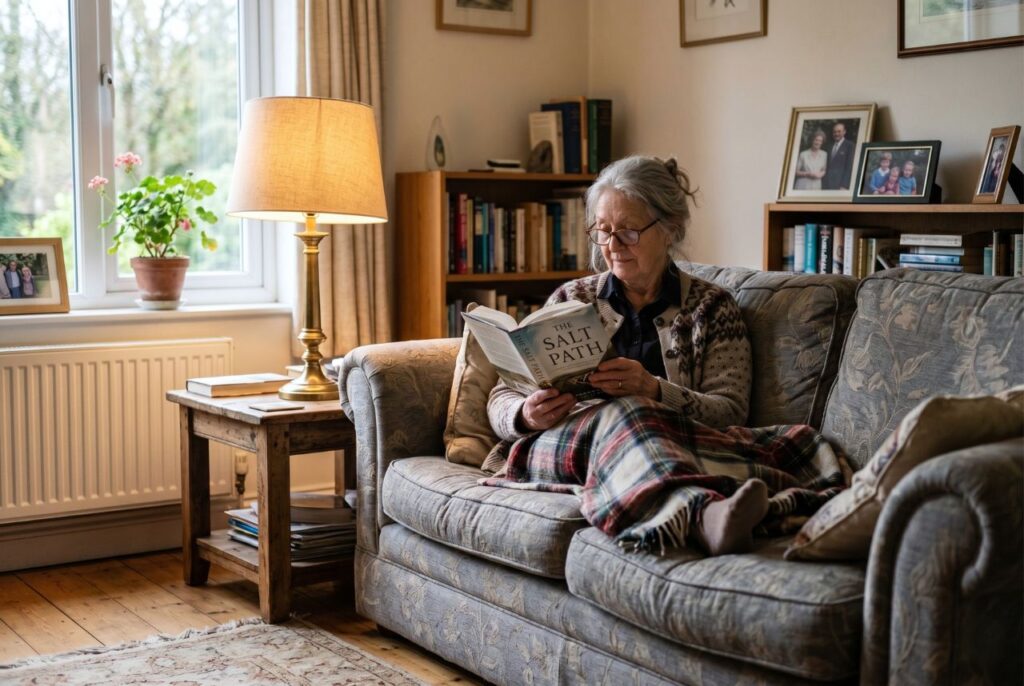
A growing body of literature addresses the science and soul of loneliness. These books about loneliness are thoughtful, accessible, and genuinely helpful for seniors and their families.
“Loneliness: Human Nature and the Need for Social Connection” by John T. Cacioppo and William Patrick is one of the most important books on this subject ever written.
Cacioppo was a University of Chicago neuroscientist who spent decades studying loneliness, and his research forms the backbone of much of what we understand about chronic loneliness today. The book is compassionate and readable.
“Together: The Healing Power of Human Connection in a Sometimes Lonely World“ by former U.S. Surgeon General Vivek Murthy is both personal and policy-minded.
Murthy draws on his work declaring loneliness a public health crisis and argues that connection must be treated as a basic human need.
“The Lonely City: Adventures in the Art of Being Alone“ by Olivia Laing blends personal memoir with cultural history and art criticism. It is a beautiful and unusual book.
Less a self-help guide and more an exploration of what loneliness feels like from the inside. Seniors who are intellectually curious will find it deeply rewarding.
“How to Be Alone“ by Sara Maitland is a quiet, philosophical book about the difference between solitude and loneliness. For seniors adjusting to life alone after the loss of a partner, this book can be genuinely transformative.
Our in-home senior care team is happy to discuss how books and reading groups can be incorporated into a care plan. Reading together with a caregiver is one of the simplest and most overlooked ways to build connection.
The Role of In-Home Care in Fighting Senior Loneliness

Professional in-home care is not just about practical support. It is one of the most direct and effective solutions to the loneliness epidemic among seniors.
When the same caregiver visits regularly to help with meals, light housekeeping, personal care, or simply sitting and talking a real relationship develops. That relationship can become one of the most meaningful in a senior’s life.
At Happier at Home, caregiver continuity is a core commitment. We work hard to match clients with caregivers who share their interests and personalities, and to keep that same caregiver visiting consistently.
This approach mirrors the findings of research on loneliness: it is not the number of social contacts that matters most, but the quality and reliability of even one or two close connections.
Our Alzheimer’s and dementia care team is specifically trained to support seniors whose cognitive challenges make communication and connection more difficult. Loneliness is a serious risk factor for cognitive decline, and genuine companionship is a form of prevention.
For families managing care from a distance, our geriatric care advocacy service provides professional coordination and regular updates so that families feel informed and seniors feel supported. Distance does not have to mean disconnection.
What Families Can Do Right Now
Families play a crucial role in protecting older loved ones from chronic loneliness. But it requires more than periodic visits and holiday calls. The most effective family support is regular, predictable, and emotionally present.
Call on a schedule. Even a weekly 15-minute call matters enormously when it is consistent. Seniors know they will hear from you, look forward to it, and feel less adrift in the days between. This is one of the simplest ways to fight the loneliness epidemic at the individual level.
Pay attention to warning signs. Chronic loneliness often hides behind phrases like “I’m fine” or “I keep myself busy.” Watch for signs like decreased interest in hobbies, changes in eating or sleeping, low energy, or increased irritability. These may signal that a senior is struggling more than they let on.
Consider professional care. If you are concerned about a loved one’s isolation and live far away, professional in-home senior care is not a last resort, it is a compassionate, practical solution.
For those facing end-of-life challenges, professional in-home hospice care provides essential emotional and physical support that allows a senior to remain in a comfortable, familiar environment.
Our team can be there every day, every week, or as needed. Getting started is simpler than most families expect.
Senior Loneliness Is Treatable
The loneliness epidemic is real, and its effects on seniors are serious. But loneliness is not permanent, and it is not something that seniors must simply endure.
With the right combination of human connection, purposeful activity, faith, professional support, and family engagement, the experience of isolation can give way to something richer and more sustaining.
The opposite to loneliness is being truly known. It is sitting across from someone who is glad you are there. It is the consistent, gentle presence of someone who shows up. That kind of connection is exactly what Happier at Home was built to provide.